Contemporary Black artists consider heritage, history and the future
No one champions Black art quite like Atlanta.
Historically, the city has hosted the National Black Arts Festival (NBAF), an annual celebration of Black artists, since 1987. Over those 38 years, the Festival has reached more than 5 million people and has welcomed notable figures such as Maya Angelou, Radcliffe Bailey and Spike Lee.
Atlanta is also home to galleries and organizations that share a similar mission — Black Art in America, the African Diaspora Art Museum of Atlanta (ADAMA), Hammonds House Museum, Nina Baldwin Gallery and Old Rabbit Gallery, to name just a few. The depth and breadth of Atlanta’s commitment to Black art and artists is beyond question, and across three recently opened exhibitions this legacy continues.
Exhibitions at SCAD FASH, Dashboard and the Emma Darnell Aviation Museum and Conference Center present three Black artists from across the African diaspora, some striking, some less so.
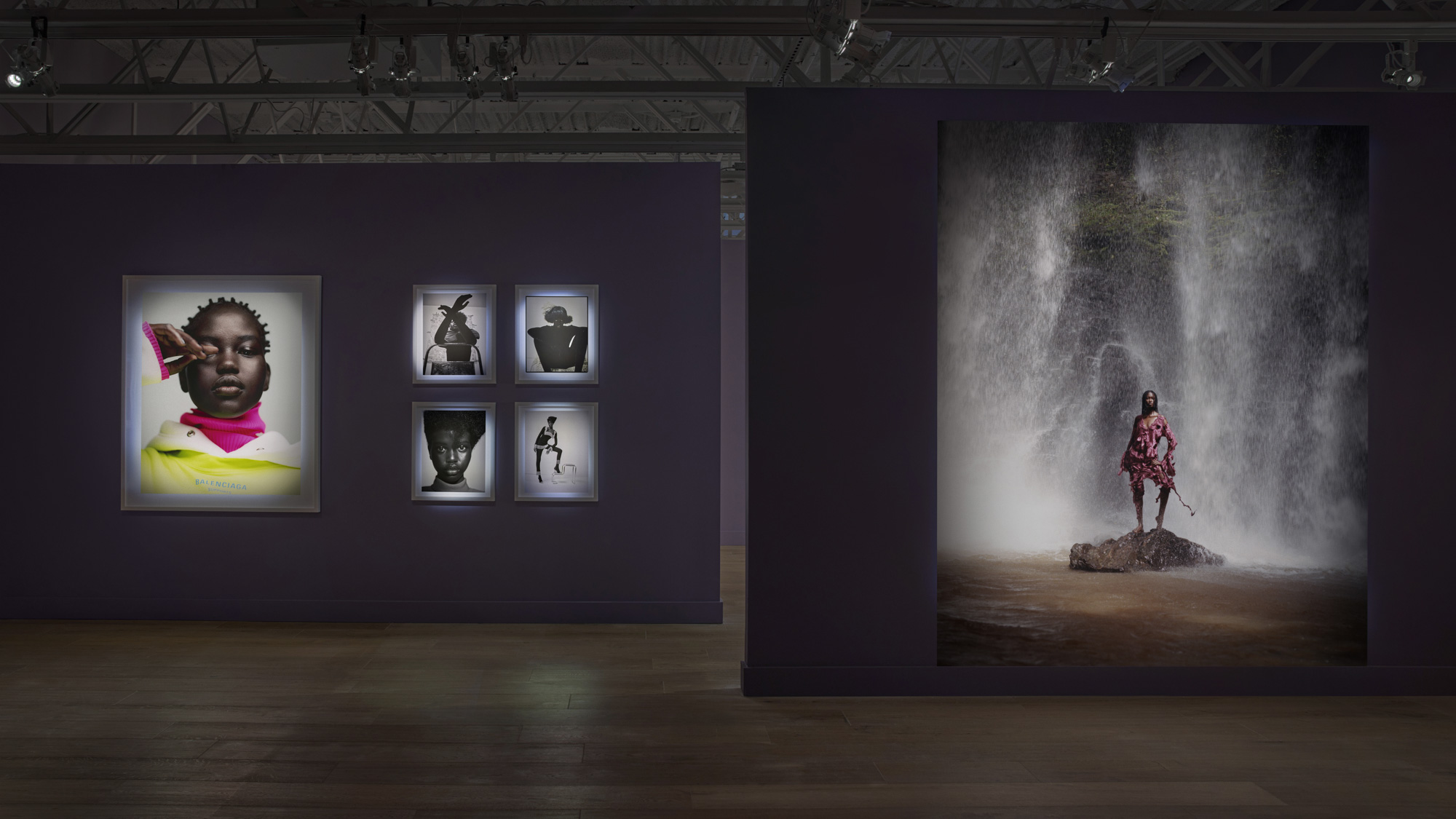
At SCAD FASH, Campbell Addy: The Stillness of Elegance (through September 7) features a retrospective of works from Addy’s career. The exhibition presents his fashion and portrait photography as a sampling of the artist’s entire oeuvre — and a striking compilation it is.
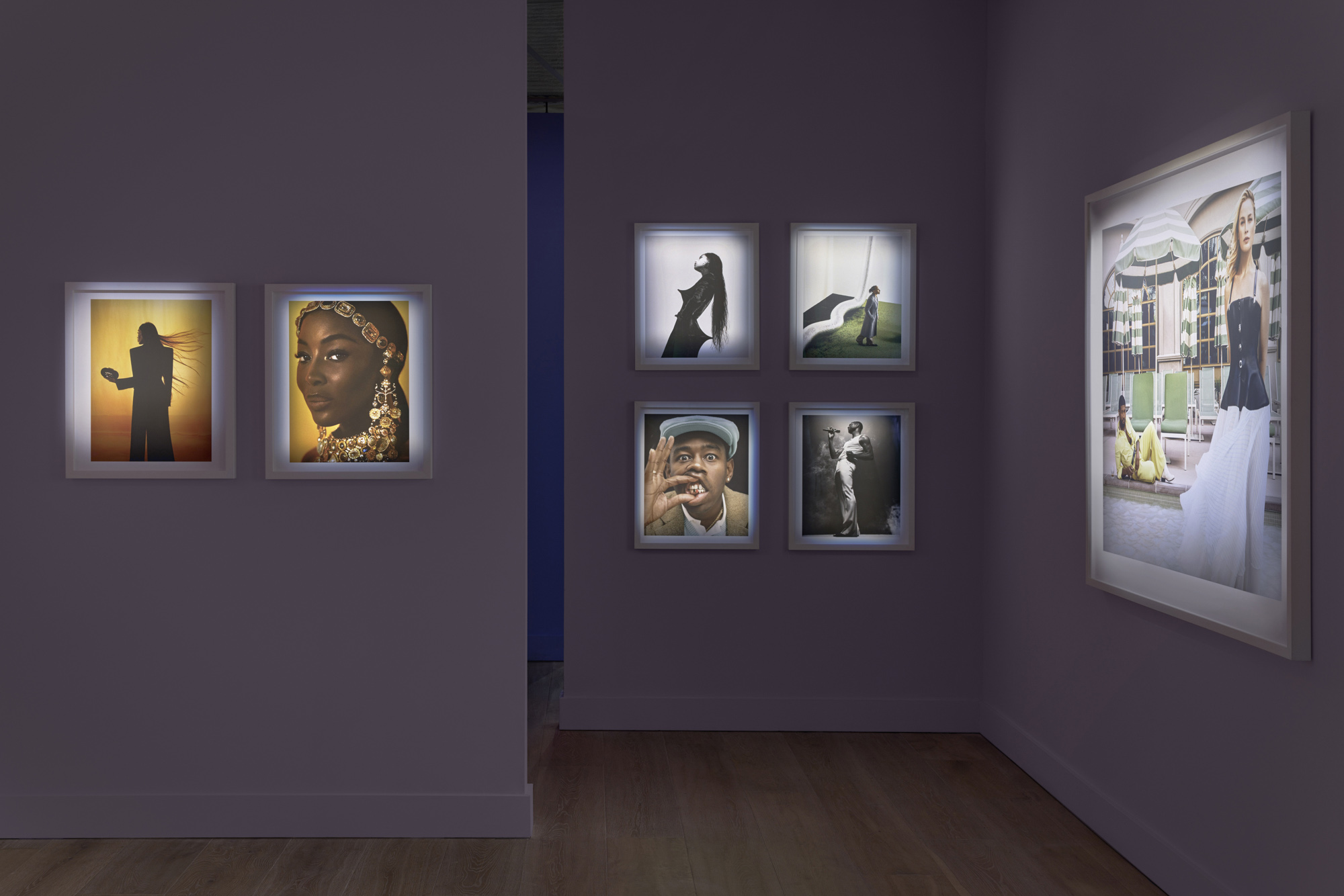


I found the most miraculous artworks in this exhibition to be those with an Afrofuturist aesthetic. Vogue India, Naomi Campbell II (2022), for example, portrays an angular silhouette standing against a ground of turmeric orange and curry yellow.
The figure holds what appears to be a purse in one outstretched hand, their long hair caught in a breeze. The scene feels almost post-apocalyptic, this figure left the lone survivor of some unseen obliteration. Carrying only a single item, their sharp shoulders cut a strong pose and exude confidence. The effect is flooring.
Addy’s traditional fashion photographs, such as Vogue, USHER II (2024), which present scenes of luxurious leisure, can seem to be at odds with the riveting, electrifying energy of artworks such as DAZED, Deliverance with Debra Shaw II (2019). These dilatory photographs do not ultimately detract from the exhibition, however, instead giving context to the artist’s career and evolution over time.
At the Goat Farm, Dashboard presents Wild Seed, an installation by Iman Person (through May 28).

In this installation, eight floor-to-ceiling photographs are printed on a textile substrate and hang from the rafter so as to sway as the air moves. This photo installation is accompanied by an ambient soundtrack featuring captures of native sounds to rural Jamaican landscapes and bottles filled with aromatic tinctures, also suspended from the rafters.
Unfortunately, I found the imparting of knowledge, which was so central to the conception of this exhibition, to be noticeably lacking. While the installation provided space for meditative solace and a welcome balm from the everyday hustle of life, little understanding was gleaned from my in-person visit.
As described on the project’s website, “A Voyage to the Islands (1707-1725) by Sir Hans Sloane claimed to document the natural world of the Caribbean, yet it ignored the knowledge of enslaved Africans, indigenous peoples and women — the very stewards of the land. Wild Seed restores what was left out. It brings forward the voices of herbalists and bushmen, inviting them to speak before the Atlanta community, weaving their narratives into the land once more.
Reducing this lush landscape to a flat image on an artificial substrate feels like visual tourism. I wish I had gained a deeper understanding of the subject through tactile samples of the environment or perhaps aromas to accompany the soundtrack. Ultimately, I felt I had a no-commitment interaction with the culture when what I wanted more than anything was to go deeper.
At the Emma Darnell Aviation Museum and Conference Center, Grace Kisa presents her solo exhibition The Sky Was Never The Limit, on view through June 6. Works in this exhibition are rooted in Namoratunga, an ancient site of man-made pillars in Northern Kenya that has served as an astronomical observatory with roots tracing back to around 44 B.C.
This site, described in the exhibition text as the location where “ancient astronomers mapped the skies synchronizing with the rhythms of the land” has been used as a wayfinder throughout the ages. I found that this sacred site’s significance — as a central reference point for the passing down of intergenerational wisdom — was not necessarily reflected in this exhibition.
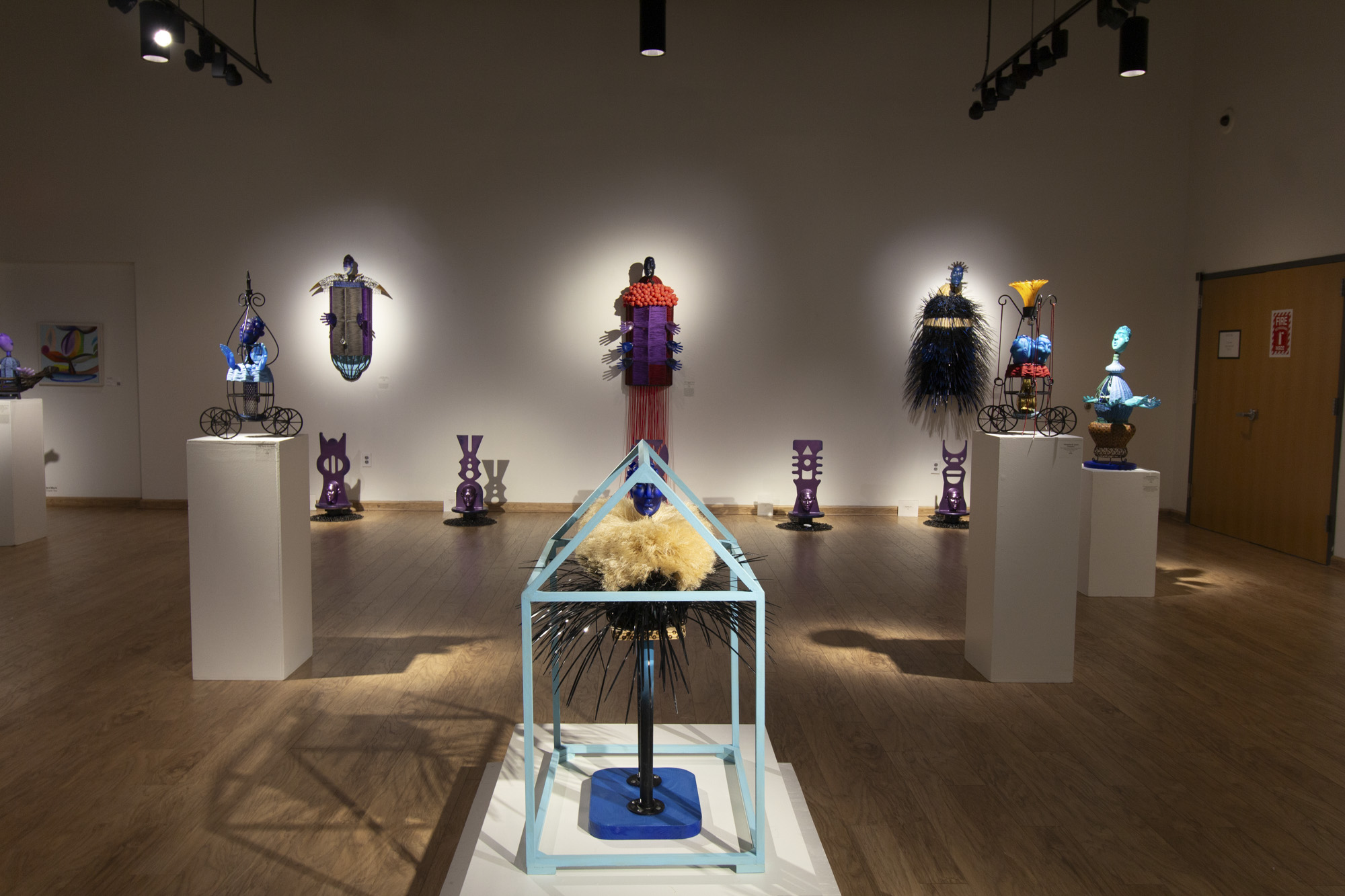


Flight Travels Fast By Word Of Mouth (2024) is a totemic wall-mounted sculpture, a cylindrical armature wrapped entirely in polyester paracord. A cloud of plastic balls and one small resin head — seemingly a miniature Masai mask — sit atop the figure. Along the length of the sculpture are resin casts of open hands, shown outward as if a gesture of non-violence toward the viewer. While the symbolic shape of the sculpture — and particularly the head — connote ancient knowledge, I could not ignore my dismay at the materials used.
The cord, balls, cast head and hands — and acrylic paint used to create this sculpture — are all plastics. Today, plastic is omnipresent in our world, and its impact undoubtedly negatively affects the natural world that sustains and inspires us. I wonder if these are the artifacts we want to leave for future generations. I suggest that it would have felt more harmonious if the materials used for these works were as sacred as the site and subject on which they focus.
The overabundance of plastic feels dystopian, as if we have dug our own grave and now we must be buried in it. While it seems that the artist would like the viewer to explore the fusion of African astronomy and digital technology, I found the prevalence of disposable plastic material to distract from the overall message.
Plastics take thousands of years to decompose, so it is likely plastics will be our artifacts for future generations. But this did not inspire any optimistic thinking within me, in opposition to what it seems was intended.
::

Leia Genis is a trans artist and writer currently based in Atlanta. Her writing has been published in Hyperallergic, Frieze, Burnaway, Art Papers and Number: Inc. magazine. Genis is a graduate of the Savannah College of Art and Design and is also an avid cyclist with a competition history at the national level.
STAY UP TO DATE ON ALL THINGS ArtsATL
Subscribe to our free weekly e-newsletter.

PLEASE SUPPORT ARTSATL
Your Gift Sustains the Coverage You Count On!
Related Posts