Contemporary Black composers interact with Schubert in pianist’s programs
Jonathan Biss will perform former Atlantan Alvin Singleton’s “Bed-Stuy Sonata for Piano,” along with two Schubert sonatas, at Spivey Hall.
::
Last year, pianist Jonathan Biss premiered a series of commissions hand-selected from three Black composers — an artist toward the beginning of his career; a jazz drummer taking the classical world by storm with introspective compositions; and a compositional veteran who built a following in Europe before serving in the mid-’80s as the Atlanta Symphony Orchestra’s second composer in residence. He paired these voices with the last three piano sonatas by Schubert, a composer who had become increasingly important to the pianist.
“Expansions of Light” by Tyson Gholston Davis, “For Anthony Braxton” by Tyshawn Sorey and Alvin Singleton’s “Bed-Stuy Sonata for Piano” didn’t have any particular ties to Schubert. Biss just wanted to pair them together to see what would happen.
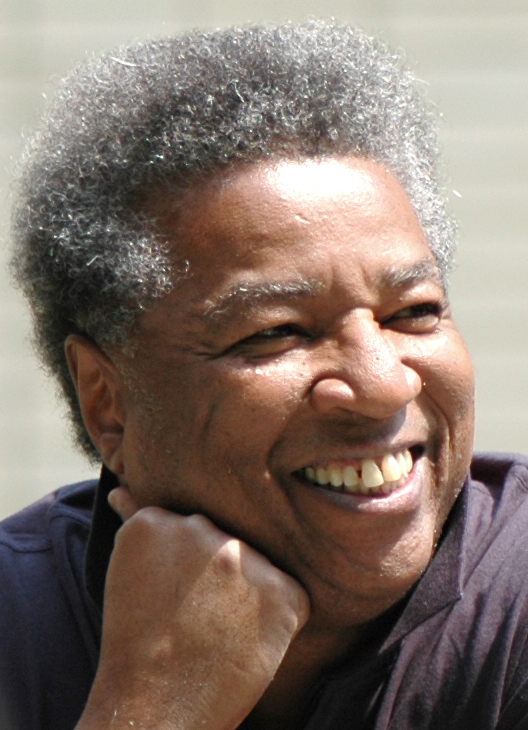
“These are simply three composers whose voices I’m drawn to, and I instinctively felt that each would make a fascinating complement to Schubert’s late music, which has been absolutely consuming me for the last few years,” Biss said.
The Singleton commission will complement Schubert’s sonatas in C Minor and B-Flat Major — numbers 958 and 960, respectively — at Spivey Hall on the campus of Clayton State University on April 5.
Biss is no stranger to Atlanta, but he last played in the area a little more than two years ago, performing Mozart’s Piano Concerto No. 20 with the Atlanta Symphony Orchestra in one of Donald Runnicles’ final appearances leading the ensemble. In 2018 and 2019, he memorably performed a series of concerts at Symphony Hall spanning an entire cycle of Beethoven sonatas. He has since revealed that in April 2019, a panic attack in the middle of a concert forced him to leave the stage; months later, just before the pandemic, crippling anxiety forced him to stop performing. During COVID’s cessation of concerts, Schubert’s music became a balm.
“Living alone and peering at an anxious future, I felt those pieces spoke to me like no others,” he wrote about Schubert’s pieces in The New York Times. “In the nearly five years since, hardly a day has gone by when I haven’t worked on at least one of them.”
In his return to Atlanta, he had originally selected the Sorey piece to join the Schubert because “the extreme deliberation of Tyshawn’s music is a powerful way to prepare the audience for the Schubert B flat.” Sorey’s work became Singleton’s when Biss realized he had an opportunity to perform the work where Singleton spent much of his composing career.
“I didn’t think of it initially because the title of the piece refers to his other hometown, NYC,” Biss said of Singleton. “Both pieces are marvelous; each interacts with Schubert in its own specific, surprising way.”
Audiences in Scottsdale, Arizona, first heard the Singleton commission in March 2024, and Biss also performed it that month in San Francisco and Boston. A writer for the Boston Music Intelligencer characterized the work as having “short pp chordal whispers and ff bursts of scales segments and figures, interleaved with creative silences and modulated with running fingered octaves.” Biss has written of the piece that it “toggles back and forth between extremes of tempo, of character, even of language.”
I’ve written about Singleton as part of a lineage of Black composers, homegrown and honorary Atlantans who pushed the classical music world forward from a city better known as the hip-hop capital. To trace that history, I interviewed Dwight Andrews, professor of music theory and African American music at Emory University.
“Alvin is one of only a small number of composers who have made a living primarily by composing. That is not an easy feat,” Andrews said. “It means that one, he understands the concert music world, and two, he’s been very, very much a part of the music world since the 1970s.”
Andrews explained that Singleton has a compositional voice all his own.
“He’s a sounding board because he’s so connected and literally lives and breathes this musical culture,” he said. “And his own musical language is so difficult to distill because each of his pieces is so different. They don’t shout ‘Alvin Singleton’.”
Singleton turned 84 in December, but “Bed-Stuy” is certainly not a piece composed by an artist winding down his career. (Bent Frequency just performed a 2022 work by Singleton, alongside Andrews’ “Three Baldwin Poems.”)
“One never slows down,” he told me. “People always ask me, ‘When are you going to retire?’ People who create never retire.”
Where & When
3 p.m. April 5. $35-$65. Spivey Hall, 2000 Clayton State Blvd., Morrow. 678-466-4200.
STAY UP TO DATE ON ALL THINGS ArtsATL
Subscribe to our free weekly e-newsletter.

PLEASE SUPPORT ARTSATL
Your Gift Sustains the Coverage You Count On!
Related Posts