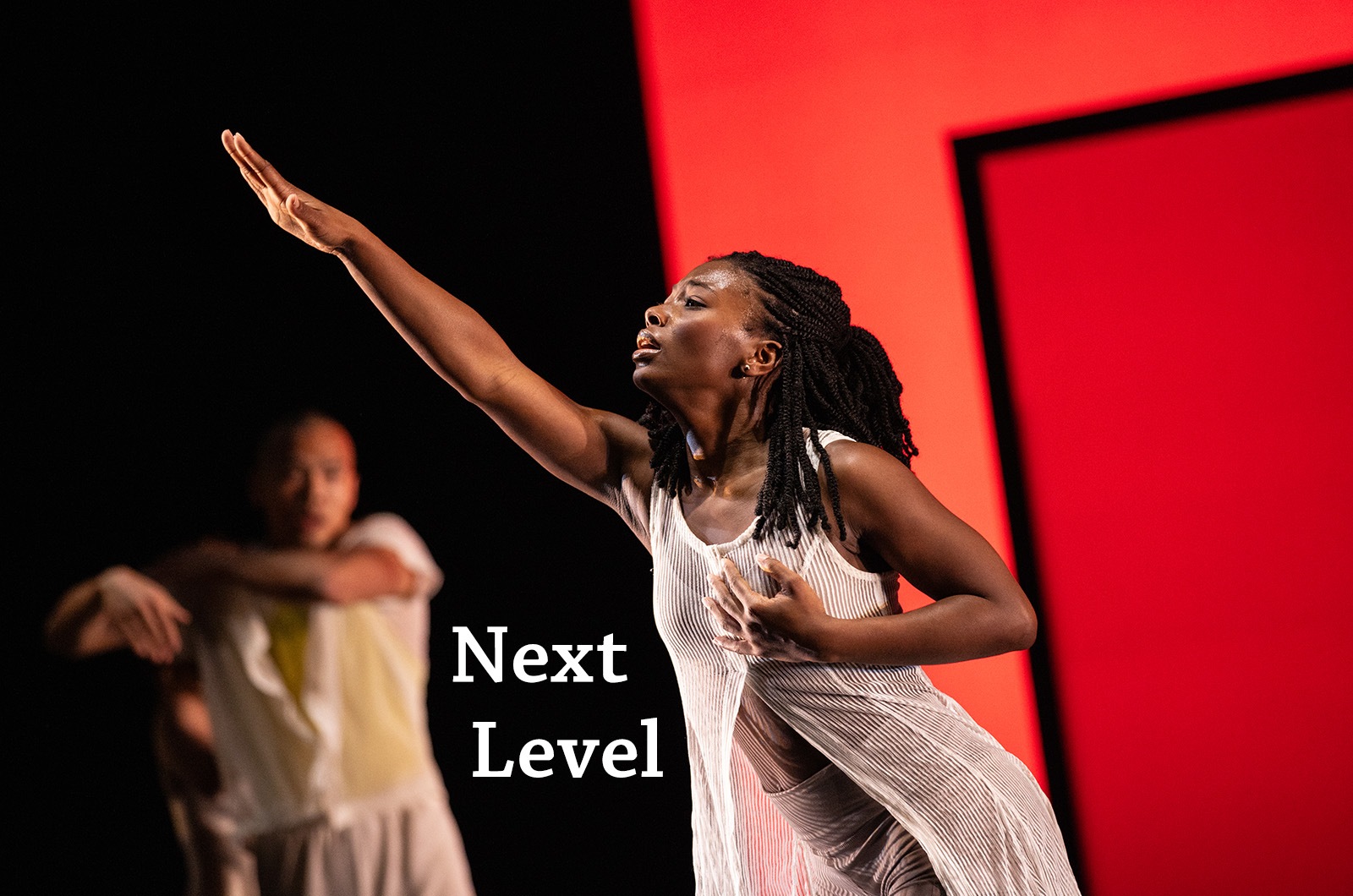
DC NEXT gives Atlanta dancers and choreographers a step up
Angela Harris, executive artistic director of Dance Canvas, founded DC NEXT 15 years ago to teach dedicated dance students every aspect of the field, from performance to production. Companies in the Southeast, New York and beyond are reaping the benefits — but Atlanta, not so much.
::
Dance Canvas and its executive artistic director, Angela Harris, are perhaps best known to Atlanta dance patrons for the nonprofit organization’s Choreographer Career Development Initiative (CCDI), which culminates in an annual showing of dance live and on film from professional artists selected to participate. The CCDI is just one manifestation of the Dance Canvas mission, however. Its successful high school and college dancer education program, DC NEXT, has been preparing students since 2010 for careers in Atlanta and the Southeast, on Broadway and in New York-based companies such as Alvin Ailey American Dance Theater, the Bill T. Jones / Arnie Zane Company and Urban Bush Women.
As DC NEXT celebrates its 15th anniversary, Harris and Danielle Marshall, a DC NEXT alumna and member of the Bill T. Jones / Arnie Zane Company, talked about the history and evolution of the program, its contributions to Atlanta dance and what a city needs to become not only a fertile training ground for professional dancers and choreographers who find work in New York and other more established dance cities but a career destination as well.
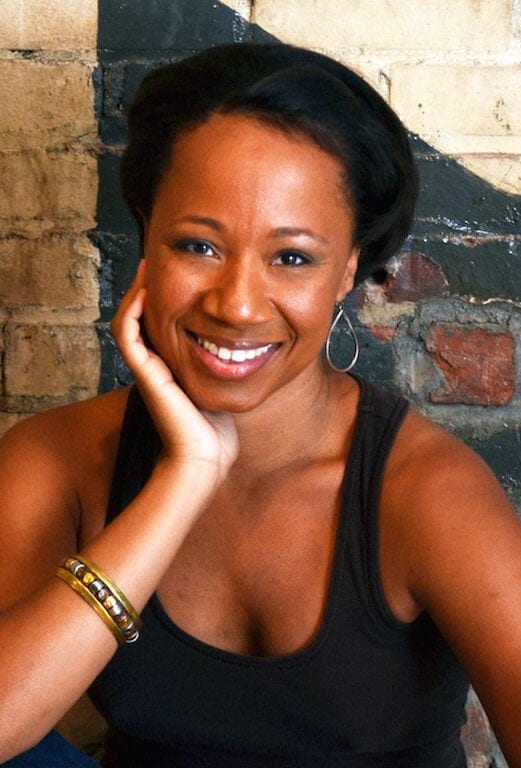
ArtsATL: Angela, the Dance Canvas website describes DC NEXT as a summer choreographic intensive for high school and college dancers, but it’s much more than that, isn’t it? Where did inspiration for the program originate, and how does it prepare student artists for professional careers?
Angela Harris: The DC NEXT program is close to my heart. I went to a performing arts high school and started training to go into this field when I was 10 years old, but I did not learn about the business side of dance until I was 25 and working in the offices at The Georgia Ballet.
At the time, I remember thinking: “Why don’t we teach kids how the industry works and the professional side of things?” Knowing how to negotiate contracts and understanding how to make a production happen are just as important to career longevity as beautiful technique and injury prevention. That is what DC NEXT does. It empowers talented, invested students to understand the field and the jobs within the field so that they go into the world with the skills they need to be successful both onstage and backstage.
ArtsATL: How do those educational goals translate into a curriculum? What does the program look like, and who helps to teach it?
Harris: We partner with Atlanta public schools — the DeKalb School of the Arts (DSA), for example — that have some sort of dance program. We set up auditions and select participants based on potential. Some of them have had years of training, others show promise and a dedication to learning more. They might be dance majors at DSA or the kid who started the hip-hop club at their school.
Over four weeks in the summer, the students begin every morning with two dance technique classes for a total of three hours. After lunch, they spend the afternoon in choreographic and production workshops, and every day ends with a professional seminar where they learn the nuts and bolts of dance as a business.
Together, the students produce a performance in the DramaTech theater on Georgia Tech’s campus. They receive guidance from faculty like Melissa Foulger, artistic director of DramaTech, and local lighting and costume designers, but they do everything themselves, from fundraising, to marketing, to ticket sales, to tech — you name it. The success or failure of the show depends on them. Some cohorts do an outstanding job; others have to learn from what went wrong. It’s as close to the real world as we can make it.
ArtsATL: Danielle, how did you get involved with DC NEXT, and what was the effect of the program on your career path as a dancer?
Danielle Marshall: I majored in dance and minored in voice at DeKalb School of the Arts, and, in my sophomore or junior year, I decided I wanted to be a professional dancer. Several of my peers from DSA went to DC NEXT in high school, but I waited until college, after my third or fourth year in the Ailey/Fordham University BFA program in New York. Honestly, I wish I had participated in the program much sooner.
While in college, I realized I wanted to be a teacher, specifically that I wanted to train others in the Horton/Ailey style. Angela was one of my mentors at DSA, and so I returned to the DC NEXT program as an intern in order to learn more about working with kids, about how to understand their needs and bridge the communication gap between expert and student. And DC NEXT did help with all of that.
In the process, I also learned more about what goes into creating work, whether it’s for professionals or students. That is something dance teachers always have to do. I learned how to structure a piece properly in order to make it flow, what sort of lighting will work best, how to create something that will showcase students and their talents in the best way possible.

ArtsATL: You are currently mentoring another DC NEXT alumna in connection with the Dance Canvas and Terminus Modern Ballet School’s CATALYST program, which supports career-tracked Black ballerinas. What drew you back to the work of Dance Canvas in Atlanta now that you have a demanding career in New York?
Marshall: It’s all about giving back. As a professional, I have come to understand that having a career means being able to see beyond this one moment. For example, taking some time off to heal will be better in the long run than pushing through the pain so that I don’t miss a performance.
There’s a whole world of dance out there that I barely knew about before I went to college. The Dance Canvas educational programs like DC NEXT and CATALYST expand a young dancer’s horizons and help them with that long view. DC NEXT gives students the freedom to be independent, to see what’s possible and that they can get it done. That is why I wanted to come back and share my own knowledge and experience.
ArtsATL: Did you realize when you decided on a professional career in dance that pursuing that goal would involve leaving Atlanta? What are some of the things you’ve enjoyed most about being a dancer thus far, and what’s on the horizon?
Marshall: My big dream was to be part of the Ailey company, so I knew that would take me away from Atlanta. Then, I joined Bill T. Jones in 2021 and, because of the pandemic, didn’t really get to start touring as much until 2022-23. The travel can be difficult and hard on the body, but I am so glad to be able to share my gift with so many people in so many places.
This season the highlight has, of course, been reviving Still/Here, which my parents were able to see me perform at the Brooklyn Academy of Music in November. I’m excited to see what it’s like to take that piece on tour, to see how other audiences respond to it. [Still/Here is a 1994 work responding to and documenting the HIV/AIDS crisis that inspired both blistering criticism and passionate defense when it premiered.]
ArtsATL: Angela, what has it been like for you to watch these dancers come up through DC Next and make their way in the dance world? How can the city encourage more of them to stay and practice their art here?
The students who have come through our 15 classes of DC NEXT are incredible, and it’s been a pleasure watching them grow up and go on to career success. Many alumni have returned to the CCDI as dancers and choreographers, and many have performed with Atlanta-based companies like Ballethnic, staibdance, The Tap Rebels and City Springs and True Colors theater companies.
To find success, though, a lot of them have to leave Atlanta. Even though there are a lot of young artists doing great work, even starting companies here, I often say that talent is our biggest export, and we need to get the word out more about what an incredible talent pool we have right here in the city. For example, five cast members from the recent production of The Wiz on Broadway were from Atlanta.
If we as a city, and Georgia as a state, invested more in arts entrepreneurship, especially dance, that would have a huge return on investment. Arts jobs are real jobs. The kids from DC NEXT have accomplished so much, but we’re not seeing them on stages in Atlanta. In so many ways, Atlanta is already a dance city. I’d love to see the community come out in a big way to support dance in a push to make Atlanta the “Broadway of the South.”
::

Robin Wharton studied dance at the School of American Ballet and the Pacific Northwest Ballet School. As an undergraduate at Tulane University in New Orleans, she was a member of the Newcomb Dance Company. In addition to a bachelor of arts in English from Tulane, Robin holds a law degree and a Ph.D. in English, both from the University of Georgia.
STAY UP TO DATE ON ALL THINGS ArtsATL
Subscribe to our free weekly e-newsletter.

PLEASE SUPPORT ARTSATL
Your Gift Sustains the Coverage You Count On!
Related Posts