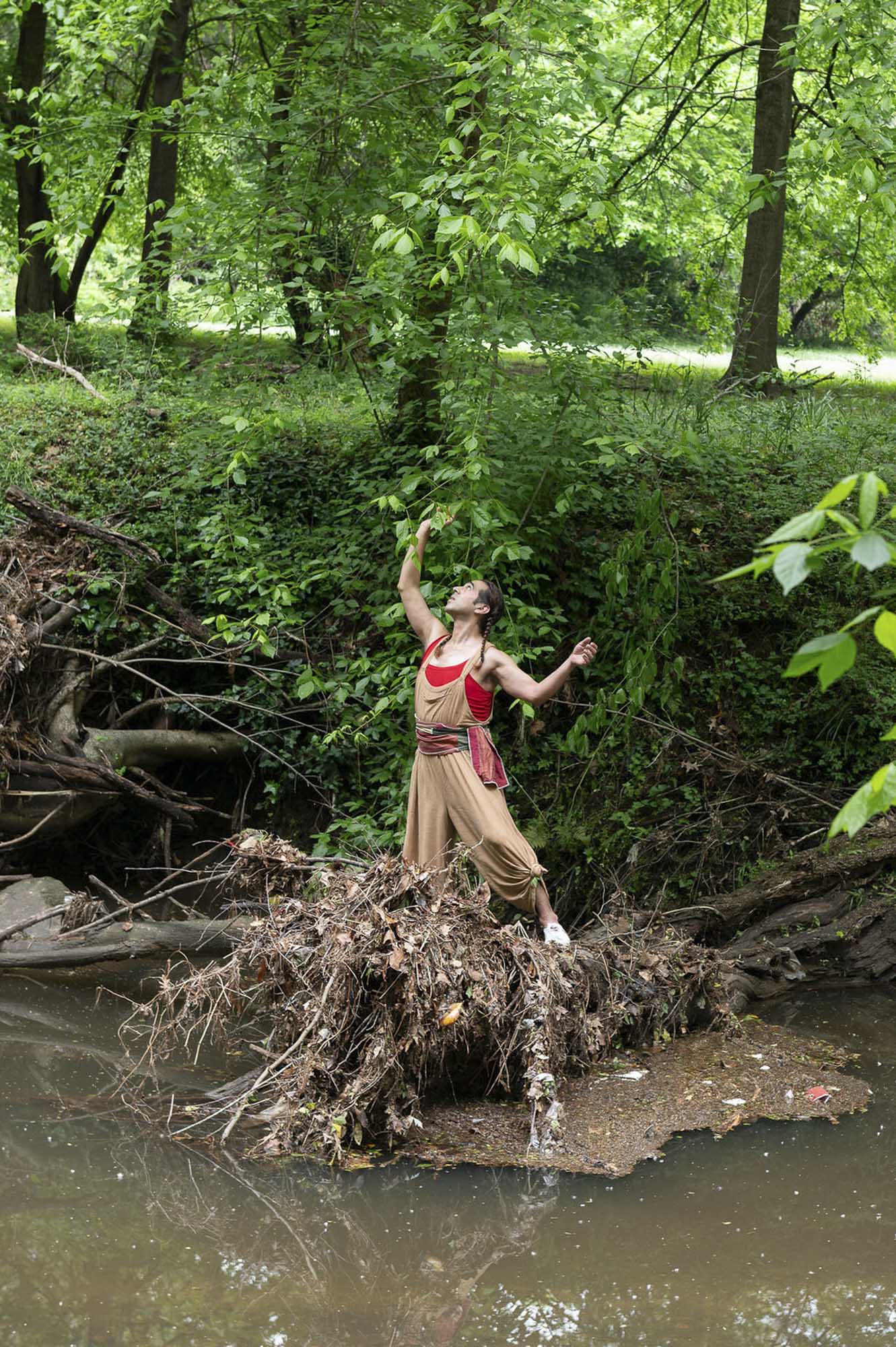
Flux Projects, Core Dance collaborate with nature for ‘Braiding Time, Memory and Water’
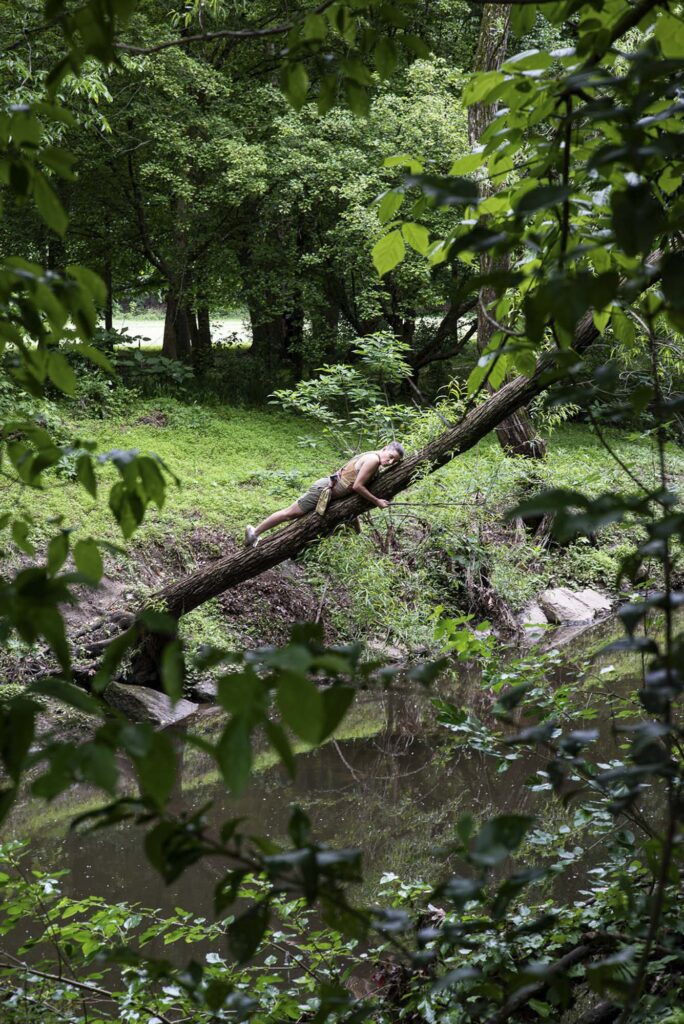
This past weekend, Flux Projects presented the second iteration of a dance performance in collaboration with Core Dance: Braiding Time, Memory and Water. The performance, which unfolded in three parts at Tanyard Creek Park, sought to reconnect viewers with the natural world through movement and music.
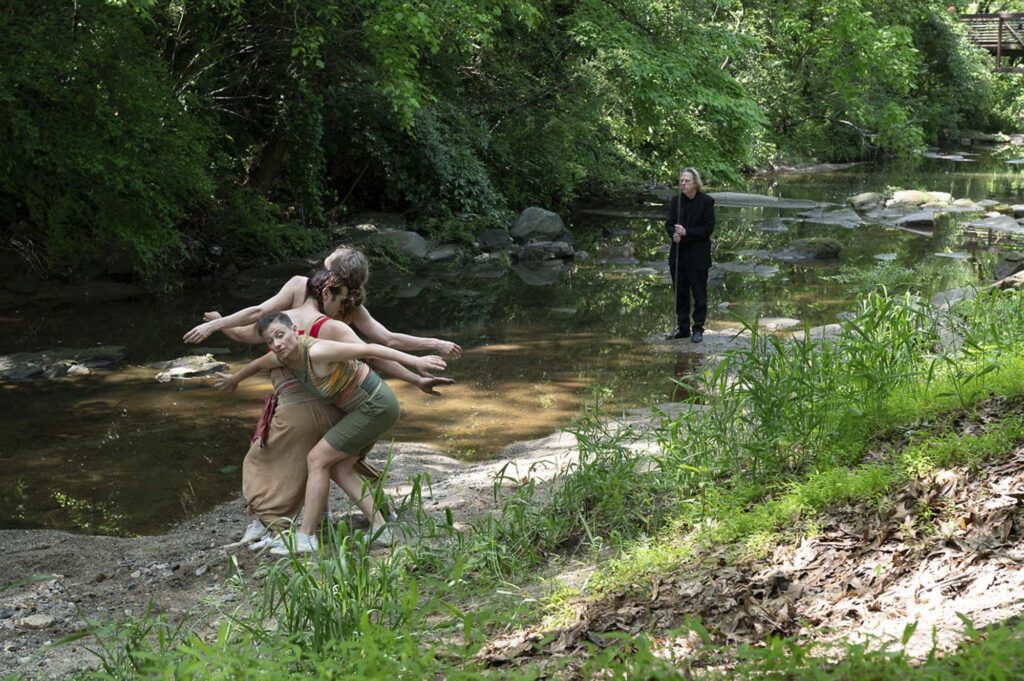
Born out of a collaboration between conceptual artist Jonathan Keats and choreographer and Co-Founding Director of Core Dance Sue Schroeder, the pace of the performance was determined by the flow of the creek at each setting. A water clock — also known as a clepsydra — determined the pace of each performance by measuring the speed of the water at each site.
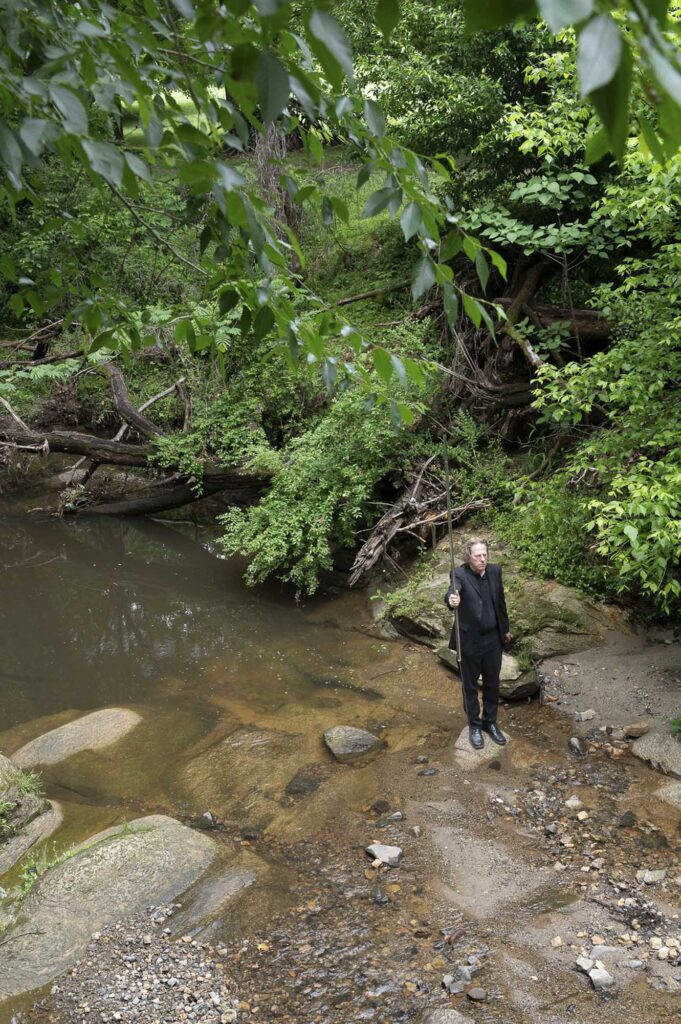
In his work, Keats highlights crucial environmental concerns for ecosystems across the globe. He first got involved with Flux Projects through its Flux Exchange program in 2020. Keats created the water clock used for these performances out of a glass tube with holes at either end and positioned himself atop a river rock in the middle of the creek to track the water’s flow.
In this way, the water itself became part of the artistic collaboration.
Schroeder has been creating dance works for more than 40 years and is a longtime participant of the National Water Dance organization, which is dedicated to using dance and movement to highlight issues surrounding climate change and the fragility of our water systems. Schroeder is recognized as a leading arts activist and has been instrumental in bringing environmental and social change to the public through compelling dance and movement performances both locally and abroad.
Flux Projects Executive Director Anne Archer Dennington spoke with ArtsATL about the significance of this performance and how the collaboration between Keats and Shroeder came about.
“Jonathan is interested in rivers as natural timekeepers, and they both are very interested in the environment, the rights of nature, the importance of slowing down and spending time observing and being part of the natural world and how that can influence people to have a greater appreciation and hopefully to take better care of the natural world.”
The musical score was composed by internationally-recognized Mexican composer Felipe Pérez Santiago, who incorporated ambient sounds of nature and the water in the creek into the final sound composition, further entrenching nature as a contributor to the overall experience. Santiago’s direction led musicians from Bent Frequency and the Georgia State University Percussion Ensemble to create a captivating musical score that accompanied the dance.
“As they performed the work, the natural world became another layer in the sound,” explained Dennington. “Every time you hear it or see it, really, it’s going to be slightly different.”
The first performance of Braiding Time, Memory and Water took place along the Chattahoochee River last fall, and Dennington noted how the sounds and light were different for the first set of performances due to the location and time of year.
Other unpredictable occurrences also influenced the performance, such as the sound of frogs, presence of ducks and even a passing train, all of which became part of the overall experience rather than a hindrance. Even the changeable presence and location of the public viewers of the performances was a variable that the dancers had to adapt to in the moment.
Another consideration in the planning of this performance was choosing the right location. Accessibility has always been of importance to the mission of Flux Projects, and Tanyard Creek Park offered a central location as well as proximity to the creek and performance sites.
“We had never worked in that area of Atlanta, and the neighborhood was amazing,” said Dennington. “We loved being there.”
Positioned along the Atlanta Beltline’s Northside Trail, this setting offered a novel experience for many who may be familiar with the park and creek as they walk, jog or visit the setting during their day-to-day life. She hopes that the experience has offered a new experience and fresh perspective for those who may otherwise take little notice of the natural beauty of the area and leave a lasting impression of joy on all who witnessed it.
Before the two-day performance, the artists completed four days of open rehearsals at the site, and Flux Projects presented all-ages activities for visitors prior to each performance. This performance intended to deepen connections between humankind and the natural world in order to facilitate solutions that will safeguard the environment through movement, music and interactions with nature.
Below are images featuring highlights from the performance captured by photographer Virginie Drujon-Kippelen.


STAY UP TO DATE ON ALL THINGS ArtsATL
Subscribe to our free weekly e-newsletter.

PLEASE SUPPORT ARTSATL
Your Gift Sustains the Coverage You Count On!
Related Posts