How to Hear It: DeKalb Symphony plays Copland’s ‘Rodeo’

In this month’s column, professional musician Alexandra Shatalova Prior highlights some of the things that makes Aaron Copland’s Rodeo so popular. It’s very danceable, which is no surprise since it was commissioned by choreographer Agnes deMille. The ballet premiered in New York in 1942 to great acclaim. Get a feel for the music before The DeKalb Symphony Orchestra plays excerpts as part of its mixed bill on Tuesday, February 4 at the Porter Sanford III Performing Arts & Community Center.
::
Copland’s Rodeo is a piece of music so American, it was used in a beef commercial in the 1990s:
Famed choreographer and dancer Agnes de Mille specifically approached Copland to compose the music for her “cowboy ballet” after hearing his score for Lincoln Kirstein’s ballet Billy the Kid. Interestingly, de Mille had choreographed her show before Copland wrote anything, and she also provided him with the American folk songs she envisioned as part of the music, which Copland incorporated into his score.
The minimalist way in which Copland folds the folk songs into the ballet is a big reason why his music sounds American: Listen to the theme from “Hoe-Down,” the final movement of the Rodeo ballet, based on the American fiddle tune “Bonaparte’s Retreat.” The theme itself is prominent, played by most of the orchestra and harmonized only with open-sounding intervals (the distance between two notes) like fourths and fifths, which mimics the open strings of the fiddle that traditionally plays this tune.
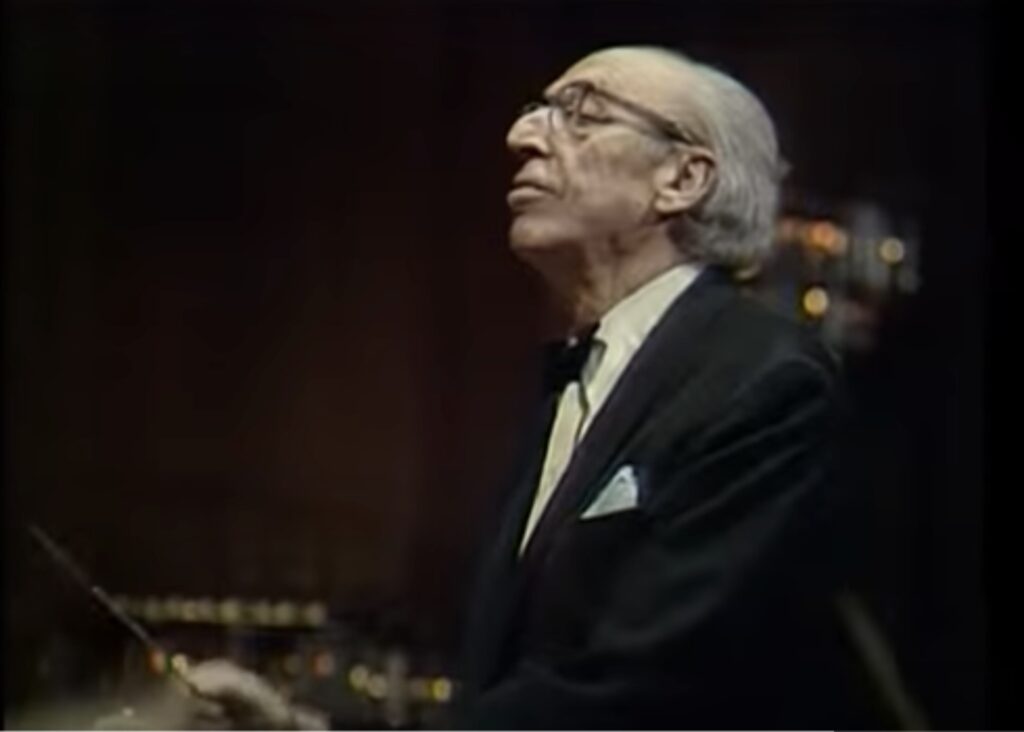
Now listen to a historical recording of the tune and enjoy the way Copland performs a magic of orchestration by imitating a single instrument with an entire orchestra. Listen closely and you will hear the voice of Doc Watson, the late, legendary bluegrass and folk musician from North Carolina.
Even when Copland has just one instrument playing the melody, like the theme in “Saturday Night Waltz,” the accompaniment again is sparse, or stark, something that is a signature move for the composer (You may remember this from his other works, like Appalachian Spring). When other instruments do join in to accompany, they either play the same melody or provide limited commentary of a few notes and simple harmony.
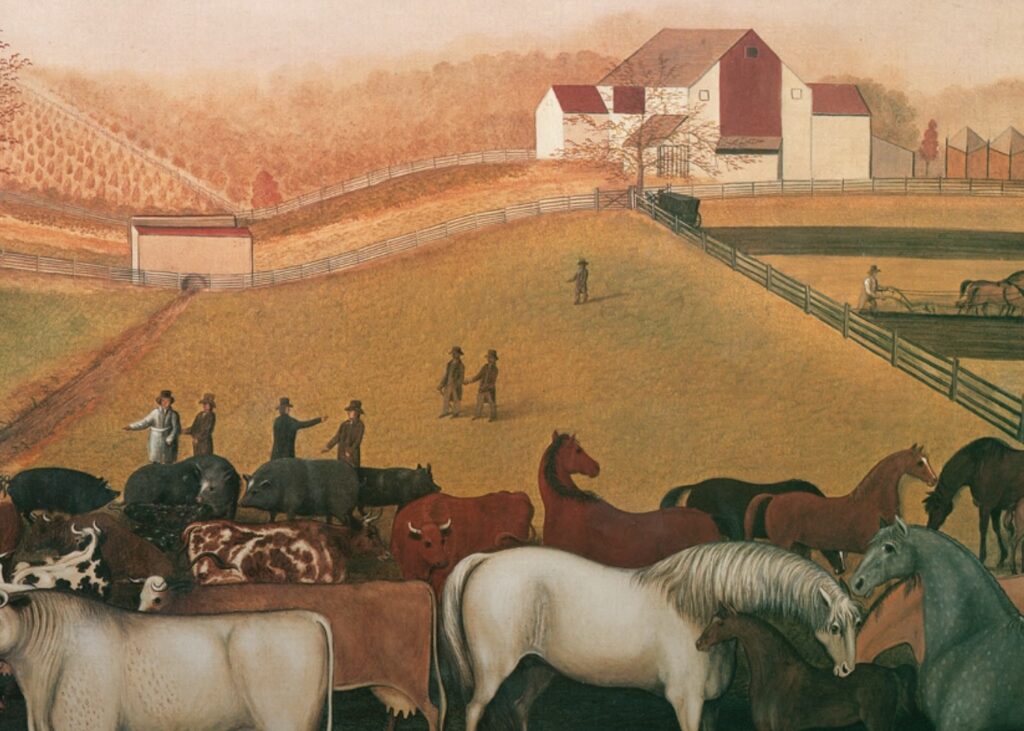
This orchestration choice is partially plot-driven in this moment, as it is depicting a lonely cowgirl being approached by a suitor, but it is also a restrained compositional move that underlines the beauty and expressiveness of simplicity. At the beginning of this movement, you can also hear the “band” tuning up before the start of the Waltz, and then more of those open-sounding intervals, which this time conjure the image of open prairie or the expansiveness of the Wild West.
Copland and de Mille wanted to express a specific slice of Americana in Rodeo, as not everyone in America would necessarily relate to the clip-clopping of horse hooves heard in the opening movement “Buckaroo Holiday:” See here deMille’s effective choreography for a cowgirl and cowboys in boots whose movements playfully indicate riding horses.
Copland’s openness of sound, minimalism and emphasis on individuality create a genuine American sound found in many of his other works, too. Check out his Fanfare for the Common Man or his Symphony No. 3.
::
Alexandra Shatalova Prior is a professional oboist who has performed nationally and internationally and is now an artist affiliate at Atlanta’s Emory University.
STAY UP TO DATE ON ALL THINGS ArtsATL
Subscribe to our free weekly e-newsletter.

PLEASE SUPPORT ARTSATL
Your Gift Sustains the Coverage You Count On!
Related Posts