Pearl Cleage on how Maynard Jackson shaped Atlanta — and her work
The diverse Atlanta we know and love today was the dream of former mayor Maynard Jackson — and of playwright Pearl Cleage, who celebrates his vision.
::
Throughout her celebrated career, Atlanta playwright, novelist and poet Pearl Cleage has always addressed issues that mean a lot to her. Her newest work, though, is one that is highly personal. Something Moving: A Meditation of Maynard is a look at the legendary Maynard Jackson. In 1974, Jackson became the 54th (and later the 56th) mayor of Atlanta and the city’s first Black mayor — and was a huge influence on Cleage’s life.
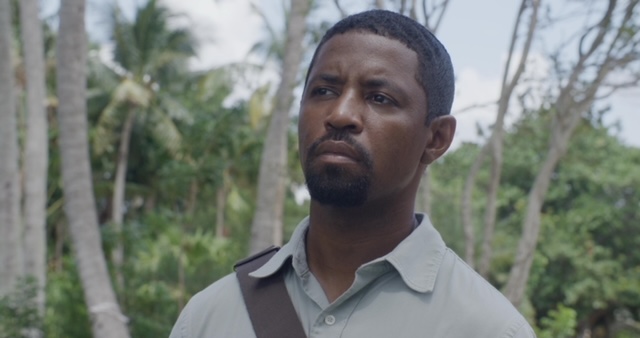
The play, which Cleage wrote last year, is directed by David Koté and runs August 2 through August 11 on the Alliance Theatre Hertz Stage. Ford’s Theatre in Washington, D.C., commissioned it under its Lincoln Legacy project and staged it in 2023. This is only the second production. It’s written to look at the pivotal moment in history 50 years ago when Jackson was elected, using nine imaginary citizens who have gathered to prepare for a program to commemorate this anniversary. Those characters speak about their feelings and what it felt like to be there.
When Cleage moved to Atlanta in 1969, Jackson was running as vice mayor, which is when she first became aware of him. Seeing him on television, she was impressed. “He was talking about all the things I thought were important,” she says. “He was very charismatic, very passionate about Atlanta. I had just gotten here, and I didn’t know anything about him. When I would ask people, they would invariably say ‘that guy is going to be the next mayor.’ People were already projecting ahead to what he might do.”
A year before, in 1968, moved by the assassinations of Bobby Kennedy, Martin Luther King Jr. and Medgar Evers, Jackson ran for the U.S. Senate against Herman Talmadge. “He was committed to trying to see if politics could be the transformative force that would help people move ahead,” says Cleage. As the first Black person who had ever run for any citywide office in the state of Georgia, Jackson did not win the race, but he did carry the city of Atlanta. That was a huge accomplishment, allowing those who supported him to understand he could win a citywide office. In 1970, he was elected vice mayor and served four years.
The two first met when Cleage was producing a public affairs show at a TV station. She invited him to be a guest on the program, told him how much she admired what he was doing and expressed interest in volunteering for his campaign. Soon after, she became Jackson’s speechwriter and press secretary, then worked at City Hall for the mayor for two-and-a-half years as his director of communications.
His win changed the city, and Atlantans were energized by his triumph and vision. “People liked to talk about the New South at the time, and what they were reacting to was a Civil Rights Movement having made significant changes — the Civil Rights bill, the voting rights bill,” says Cleage. “[They] were talking about the South as a place that was looking forward, [where] some of the less desirable elements of the past year — segregation and voter intimidation — would be left in favor of a New South, where people came together and worked together to make the place better. By electing Maynard, it was like saying we exemplify everything good that people mean when they say the New South. This is the place where we are going to make a different kind of city, and we are going to do it working together.”
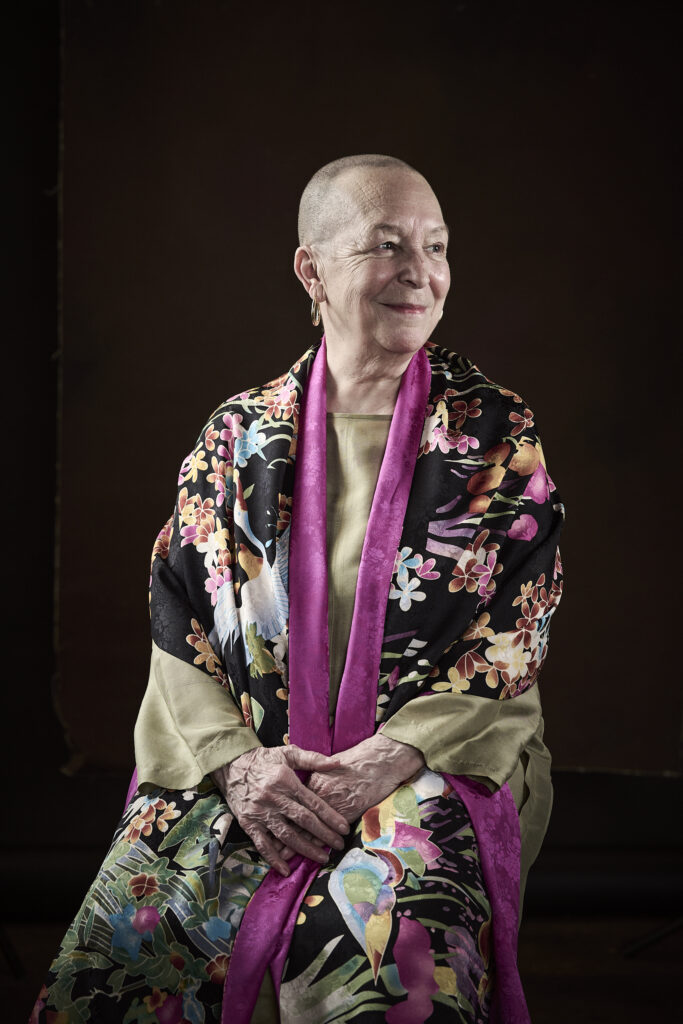
According to Cleage, who is also the playwright in residence at the Alliance Theatre, Jackson loved the city in a way she had never seen anybody love a place. He believed in the potential of Atlanta to be a world-class location “where people did amazing things; where there was a vibrant arts community; where there were neighborhoods that were vibrant and reviving.” The idea that he was so committed to Atlanta and to being part of the transformation of the city was a part of his significant appeal. Cleage has vivid memories of riding around with Mayor Jackson on numerous events and how he bonded with Atlantans.
“I will never forget, almost every street we went down, he knew somebody who lived on that street, knew them well enough to ask about their family, how their grandchildren were doing.”
The characters in Something Moving represent different communities, as well as a cross section of older Atlantans and younger people who were not born when Jackson was elected the first time. Cleage herself was only 25 when she started working with him.
“Nobody knew what it was going to be like. We had never had this racial transformation, so people were meeting each other across race lines and class lines. It wasn’t like there was a blueprint. Everybody was trying to figure it out and rise to the occasion.”
One of Jackson’s gifts was to be more inclusive and bring more voices to the table, in sharp contrast to previous terms of what Cleage calls “the usually wealthy white men who made decisions about Atlanta.”
The playwright’s interactions with Jackson have forever shaped her. “Maynard changed my life completely and made me want to stay in Atlanta. He made me see that politics could work in a place like this in a way that I hadn’t thought it could. He loved Atlanta, and he gave me that gift to teach me to do it too.”
::
Jim Farmer is the recipient of the 2022 National Arts and Entertainment Journalism Award for Best Theatre Feature and a nominee for Online Journalist of the Year. A member of five national critics’ organizations, he covers theater and film for ArtsATL. A graduate of the University of Georgia, he has written about the arts for 30-plus years. Jim is the festival director of Out on Film, Atlanta’s LGBTQ film festival, and lives in Avondale Estates with his husband, Craig, and dog, Douglas.
STAY UP TO DATE ON ALL THINGS ArtsATL
Subscribe to our free weekly e-newsletter.

PLEASE SUPPORT ARTSATL
Your Gift Sustains the Coverage You Count On!
Related Posts