Q&A: How three local film creatives are shifting gears during the recent strikes
Before ever hearing “yes,” they tend to hear “no” — over and over. And oftentimes, even after scoring the yes, they rely on day jobs, second jobs and endless life lessons.
Heading into days 100+ and 30+, respectively, of the Writers Guild of America (WGA) and Screen Actors Guild-American Federation of Television and Radio Artists (SAG-AFTRA) recent strikes, three Atlanta film industry players share how they’re shifting gears right now to help them in the future.
ArtsATL sat down with all three to hear more about this period and how they’re spending their time productively and staying positive. Their responses show support for fellow creatives and a resolve to come out well-prepared and ready on the other side.
Autumn Bailey-Ford, Producer
The founder of Atlanta-based production company Autumn Bailey Entertainment has

produced more than 30 films and numerous projects for television, domestically and internationally.
Bailey-Ford’s producing credits include Maynard, an award-winning, feature-length documentary on civil rights activist Maynard Jackson Jr.; 2019 action-drama film Trading Paint, starring John Travolta and Shania Twain; and a string of other projects.
Known for her work on studio and indie projects alike, she currently has several studio projects on hold under the terms of the strike.
ArtsATL: How are you keeping busy during the WGA and SAG-AFTRA strikes?
Bailey-Ford: I’m using this time to focus on development and packaging projects with directors. Also, I’m reading many of the books and scripts I’ve had for a while. Finally, I’m focusing on a few international projects, reading more on the waiver process [for indie productions] and talking to industry professionals currently using them in production. When the strike is over, I plan to be right on track.
ArtsATL: How are you supporting fellow film industry professionals?
Bailey-Ford: [I’m] supporting my writer and actor friends with encouragement, calling and checking on them and just showing overall support.
Watching this strike last 100 days and seeing these hardworking industry professionals stand up and speak out says a lot about the changes that need to happen in the industry. As a producer, I am nothing without the amazing creative writers who put pen to paper to create a story and the brilliant minds of actors and actresses who bring those stories to life. This strike is healthy, and I will always support these individuals because without them I have no job. We truly are one industry family. I hope this ends soon — with something they can be happy with.”
Jennifer Carriere, Script Supervisor
As a seasoned professional script supervisor, Jennifer Carriere has worked for most of the major film and television studios in the country over the years from both Atlanta and New Orleans. She describes the on-set role of a script supervisor as being that of a mini director and producer, screenwriter’s representative, editor’s advocate and actor’s wingman, all in one.

She also has a side business, Script Supervisor CEO, where she teaches others her time-tested method for handling the job successfully. The skills she teaches are ones she has honed as script supervisor on films such as Left Behind, The Iceman, Stolen and The East.
ArtsATL: How are you working while waiting on these strikes to resolve?
Carriere: I’m continuing to train and mentor future script supervisors and put them on indie projects, which are unaffected by the strikes. Our strategy is to get them fully ready to snap up the tidal wave of work on projects that suddenly need staffing when the strike ends. This strategy enormously benefited my career when I employed it during the 2007-2008 writers strike.
[In addition,] I’m working on my real estate side business daily. [And] I’m training for a destination race in October.
ArtsATL: Based on your experiences, what are the best ways to weather strikes?
Carriere: I’m staying positive. Strikes are temporary. They WILL end, and our jobs will be better for them.
[During this strike], I took a long trip home to be with my family. It was like a big ol’ warm blanket. I didn’t realize how much I needed it.
ArtsATL: What’s your advice or strategy for minding physical and mental health during this stressful time?
Carriere: This is a stressful time for filmmakers. To fellow creatives, I urge you to practice keeping your mental and physical health strong every day. Get into a great state at the top of the day and redirect as needed.
For me, that looks like clearing my mind, then reflecting on what I’m grateful and excited for today. (As a recovering skeptic, I know this may sound woo-woo to some, but I wouldn’t recommend it if it didn’t seriously work!) Having activities and a purpose on your daily agenda is the best way to combat worries about the uncertain future.
When I get worried, I reread and reflect on a quote that centers me every time: The best possible way to prepare for tomorrow is to concentrate with all your intelligence and all your enthusiasm on doing today’s work superbly well today.
Mila Harris, Actor
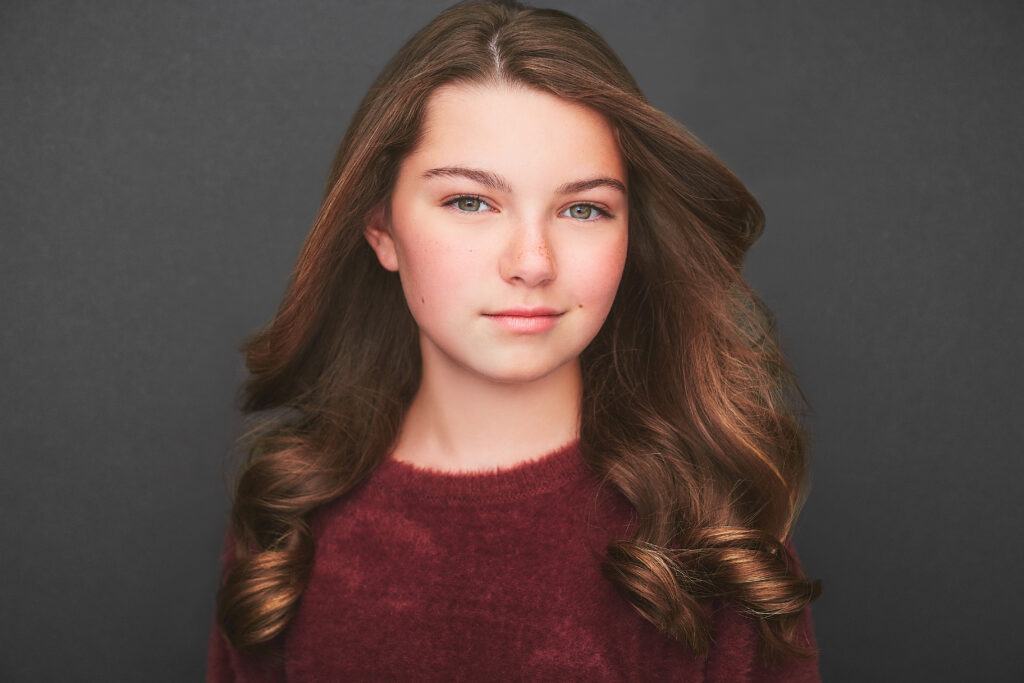
The busy 13-year-old Atlanta-based actor, model and writer is using her time this summer to grow, literally and figuratively. With a burgeoning body of work that includes a lead role as character Jay in Disney thriller No Exit, Harris also has a new film releasing in theaters this week: The Hill, starring Dennis Quaid and Joelle Carter.
Currently on hold is her new film The December Cross, in pre-production.
ArtsATL: How are you using your time wisely during the strikes?
Harris: I am spending time learning new skills like songwriting, voice lessons and horseback riding, to name a few. These are particularly useful skills in the world of acting. For example, I have a Western movie that is delayed and requires me to learn Western-style horse riding skills, so it’s a [good] time for me to practice, plus I found out that I have a love for it.
I am also reading a lot of scripts right now for projects that are backlogged that I am looking at exploring once the strike is over.
[In addition], I am very fortunate to have a few movies coming up that are independent of studios, so these have only been slightly pushed back with not as much of a hold as the studio films.
ArtsATL: How are you relating to your fellow film creatives?
Harris: Many people are hurting right now, but I can honestly say what makes this industry so special is the people in it and how close we all work together. Do not lose track of them; they are your family and everyone needs a little extra support right now — and we have to look out for each other.
ArtsATL: What’s your strategy for preparing for the future?
Harris: There is no time to waste as an actor, as this craft constantly requires you to learn new things and broaden your life experiences so you can connect to the characters you portray.
In addition to learning new skills and reading more stories, there’s no greater way to relate to your characters than by living as many experiences in the real world as you can. Travel, go watch people at a café, sit and read a book in the park, get active in a sport, volunteer in a food kitchen or work in community theater. These things ultimately make [us] feel closer to humanity, which creates a greater sense of empathy and makes [a person] a better storyteller.
::
Carol Badaracco Padgett is an Atlanta freelance writer who specializes in film and television coverage. A graduate of the University of Missouri School of Journalism, her work has appeared in publications nationwide.
STAY UP TO DATE ON ALL THINGS ArtsATL
Subscribe to our free weekly e-newsletter.

PLEASE SUPPORT ARTSATL
Your Gift Sustains the Coverage You Count On!
Related Posts