Bojana Ginn reinvents the future at a Georgia Tech lab
Multimedia artist Bojana Ginn is using her Georgia Tech residency to find new ways of fighting trash and pollution. And she’s making beautiful objects in the process.
::
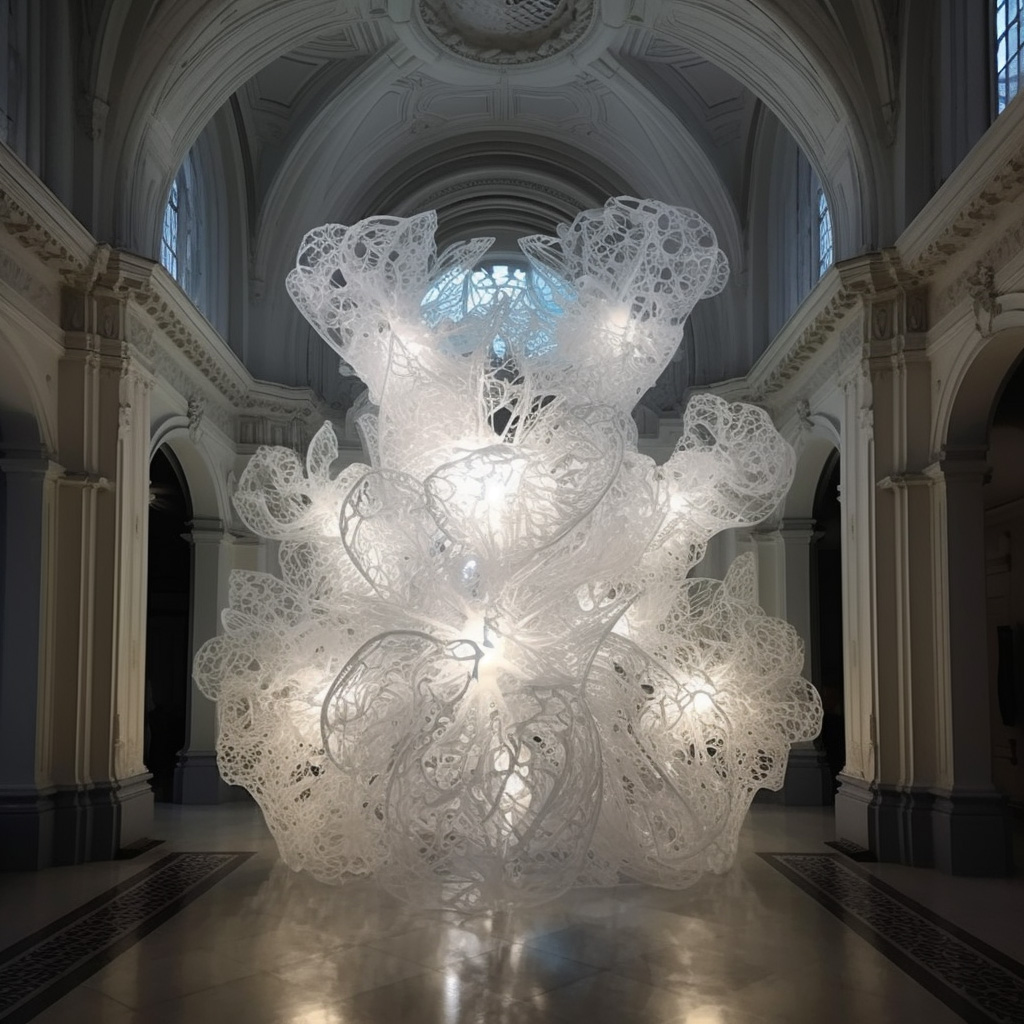
There are two ways to change the world, according to artist Dr. Bojana Ginn: You can critique what’s happening, or you can be the change you want to see. But it’s the latter approach that resonates most with her and offers a glimpse into what she is exploring during her artist residency at the Georgia Institute of Technology.
The Georgia Tech Library Artist-in-Residence Program is a collaboration between the university’s library and the Interdisciplinary Media Arts Center. Ginn was selected for the third installment of the program, described on the website as an initiative that “enhances and expands the current educational experience through arts-based programming as it relates to STEM fields and Georgia Tech areas of study” and “supports the mission of the library through arts-based programming and engagement.”
The residency came about through her searching online for creative opportunities. “This is perfect,” she says, reflecting on the moment she came across the residency during our conversation. “It’s what I do, you know. It’s science, it’s technology and it’s art.”

Ginn initially started her career as a doctor, training in medicine at the University of Belgrade, but art was always with her. Combining science and technology, along with art, the residency gives her the space, platform and tools to combine her passions.
“What I love about people at Georgia Tech is that they are so curious,” she says.
Ginn, through her research into ways to fight plastic pollution, came across an organism known to be able to digest plastic. She’s careful to mention it doesn’t digest 100% of it, but, in her words, it digests “a lot.”
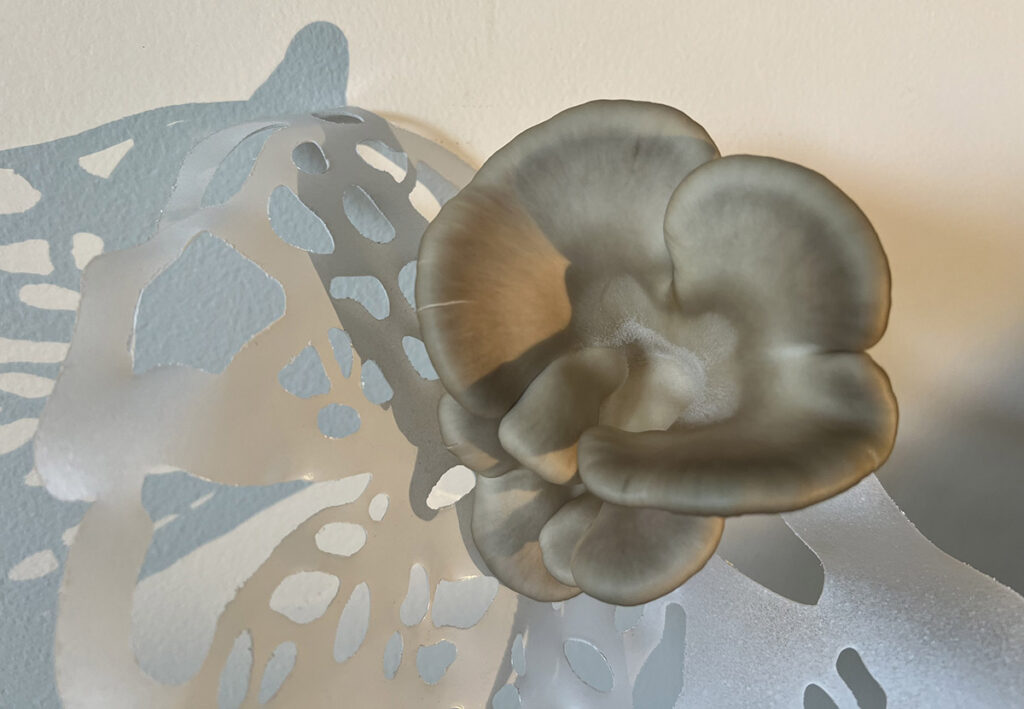
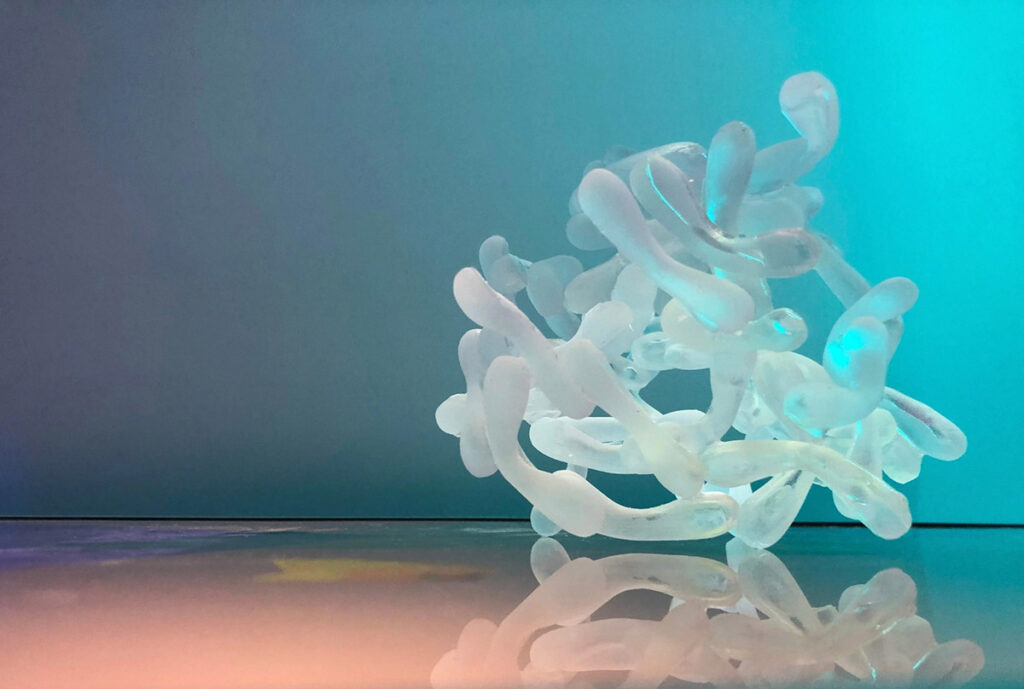
She hopes to show the world that there could be answers in art to plastic pollution and is excited about the experimentation in this area. The collaborative project — she’s working with students Mya Love and Anastacia Devlin — in its final form would be what she describes as “sculptural jewelry.” The plastic-eating fungi eats away at a sculptural work fabricated in plastic, gradually digesting the plastic and turning it into organic jewelry pieces.
Another project she’s working on with artist and designer Supratim Pait is the use of biomarkers to create art — essentially a way to create art with your heart. She describes her work as “phygital,” meaning half-digital, half-physical. But it’s the body that is always present in her work. Both projects are a part of her Orchid’s Dream series.

Her journey from medicine to art brought her to a SCAD MFA program. She entered as a painter, but, after taking a class in sculpture, fell in love and continued her focus on sculpture from that point forward. This was, she says, “a little miracle.”
Ginn is an artist who likes to confront her fears. She was initially afraid of technology but understood that grappling with technology, even as an artist, would be key for her. And it became easier. Eventually, as she continued working with technology in her artistic practice, moving through her fears, her mind became more engaged, the ideas flowed and the work flowed as well.
“It was fabulous,” she says.
She describes her process as being a mini-factory, where she has to strike a balance between high organization and play. She follows a predetermined concept but makes room for what she describes as “happy accidents” when they happen and allows them to be a part of her work.
The crux of her work isn’t just the merger of science and art to create new and innovative forms of creative expression. It’s also through the spectacle of magnifying the microscopic world, the world outside of the range of the naked eye and the mysterious processes of life, rendering them on a large scale. This gives her work a spiritual dimension.
However, her work also serves as part cautionary tale. She is an artist interested in the sustainability of this planet, evident in the projects she pursues and her commitment to addressing plastic pollution.

During the residency, which runs through the summer and into the fall, she hopes to offer workshops and organize art talks with members of the art and science communities. Georgia Tech will also have a booth at the Atlanta Art Fair.
“I’m an optimist.” Ginn says, which is evident in her work being so forward looking and through her radical artistic engagement with technology. But it’s in her engagement with the past, the human body and the natural world as the most ancient materials of all that suggests a clear-eyed reverence for the historical.
This pulls the curtains back a bit, offering a glimpse into her approach to personal and collective memory: “I’m the kind of person that remembers the best,” she says, then goes on to say that she also “loves to look into future and deal with some things that I’m passionate about.” This optimism circulates through her work and becomes the call to action and the message.
::

Charles Stephens is an Atlanta-based writer. His work has appeared in publications such as Atlanta magazine, Creative Loafing, The Atlanta Journal-Constitution, Georgia Voice, The Advocate and Them.
STAY UP TO DATE ON ALL THINGS ArtsATL
Subscribe to our free weekly e-newsletter.

PLEASE SUPPORT ARTSATL
Your Gift Sustains the Coverage You Count On!
Related Posts