How to Hear It: Beethoven’s Piano Sonata No. 26 at Spivey Hall

Atlanta is having a Beethoven moment, with the Atlanta Symphony Orchestra marching through eight of the composer’s nine symphonies this season, but, as musician Alexandra Shatalova Prior explains below, a single piano can also express Beethoven’s extraordinary musical gifts and the way he used music to express his deepest feelings — a new concept in his time.
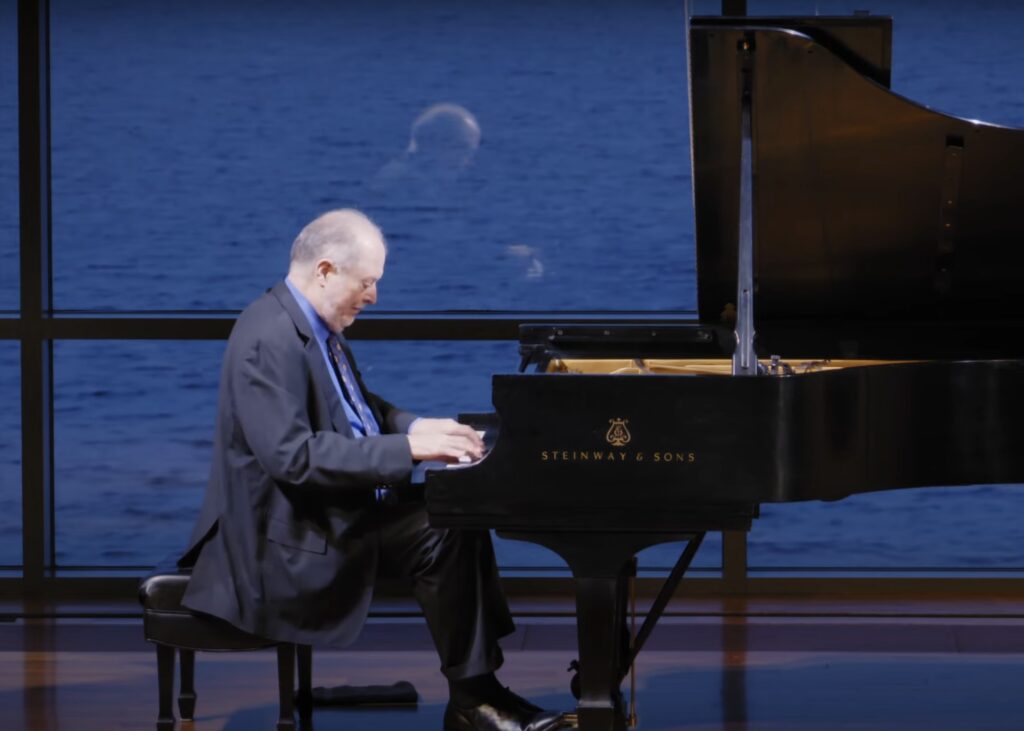
Beethoven’s fame has nearly no match in the classical music world. His unique compositional mastery lies in his ability to take a small musical idea and change its character and meaning from one moment to the next, treating us to an emotional journey grounded in human experience. This is the expressive challenge that performers take on when performing the composer’s works, as pianist Elisabeth Brauss will do at Spivey Hall on March 15 when she performs Beethoven’s pivotal Piano Sonata No. 26 in E-flat major, Op. 81a, “Les Adieux.”
Completed in 1810, “Les Adieux” was written during an emotionally turbulent time in Beethoven’s life and is from Beethoven’s middle “Heroic” period of composition, which includes some of his best-known works, such as the Emperor Concerto and Eroica Symphony, (which the ASO performed earlier this year.) It was a period, too, in which Beethoven was fixated on the idea of heroism, as embodied by Napoleon Bonaparte. His idealism eventually soured, and he wrote “Les Adieux” because Napoleon’s attack on Vienna forced Beethoven’s patron, Archduke Rudolph, to flee the city. In this sonata, Beethoven expresses his feelings about being left behind by a dear friend in these three movements:“Lebewohl” (farewell), “Abwesenheit (absence) and “Wiedersehen” (reunion).
From the beginning, “Les Adieux” is anchored in these emotions of despair versus gratitude. In the piano score, Beethoven inscribes the phrase “Le-be-wohl,” over the opening three chords, which are an important building block for the entire piece; if you listen closely, you can hear echoes of the three-note motive in all three movements. Click on the photo below to hear it:

After an agitated opening, listen for a distinct change in mood in the first movement’s second theme, which is more lyrical, reflective and almost innocent-sounding. When a loved one leaves, anger often makes way for sadness and nostalgia. Click on the photo below for the clip.

At the end of the movement you can hear the drawn-out repetition of the “Le-be-wohl” motive, imitating a wistful goodbye.

From the very beginning of the second movement, we hear the emptiness and aimlessness caused by the “absence” of a friend, which Beethoven creates by outlining the diminished chord in the left (lower) hand, as well as a meandering, unsettled feel in the right hand melody.

After the angst of the first two movements, the third “reunion” movement feels like a release of tension, with virtuosic scales and octaves that have changed their expression from yearning to joyful. Instead of uncomfortable harmonic clashes like those we heard in the second movement, melody and accompaniment move in the same direction and even converse, as you can hear in this theme that is reminiscent of joyful themes of gratitude in Beethoven’s Eroica Symphony and Pastorale Symphony.
The connection between emotion and music may seem obvious to us today, but Beethoven was a renegade in how openly he combined the two in his compositions: To him, unlike many of his contemporaries, music and life were inextricably linked. You can read about his personal struggles and musical philosophy in a deeply personal letter to his brothers, now called his Heiligenstadt Testament. That philosophy paved the way for the Romantic era.
STAY UP TO DATE ON ALL THINGS ArtsATL
Subscribe to our free weekly e-newsletter.

PLEASE SUPPORT ARTSATL
Your Gift Sustains the Coverage You Count On!
Related Posts