Medford and Loraine Johnston Collection sheds new light at the High Museum

Matthew Marks Gallery, New York)
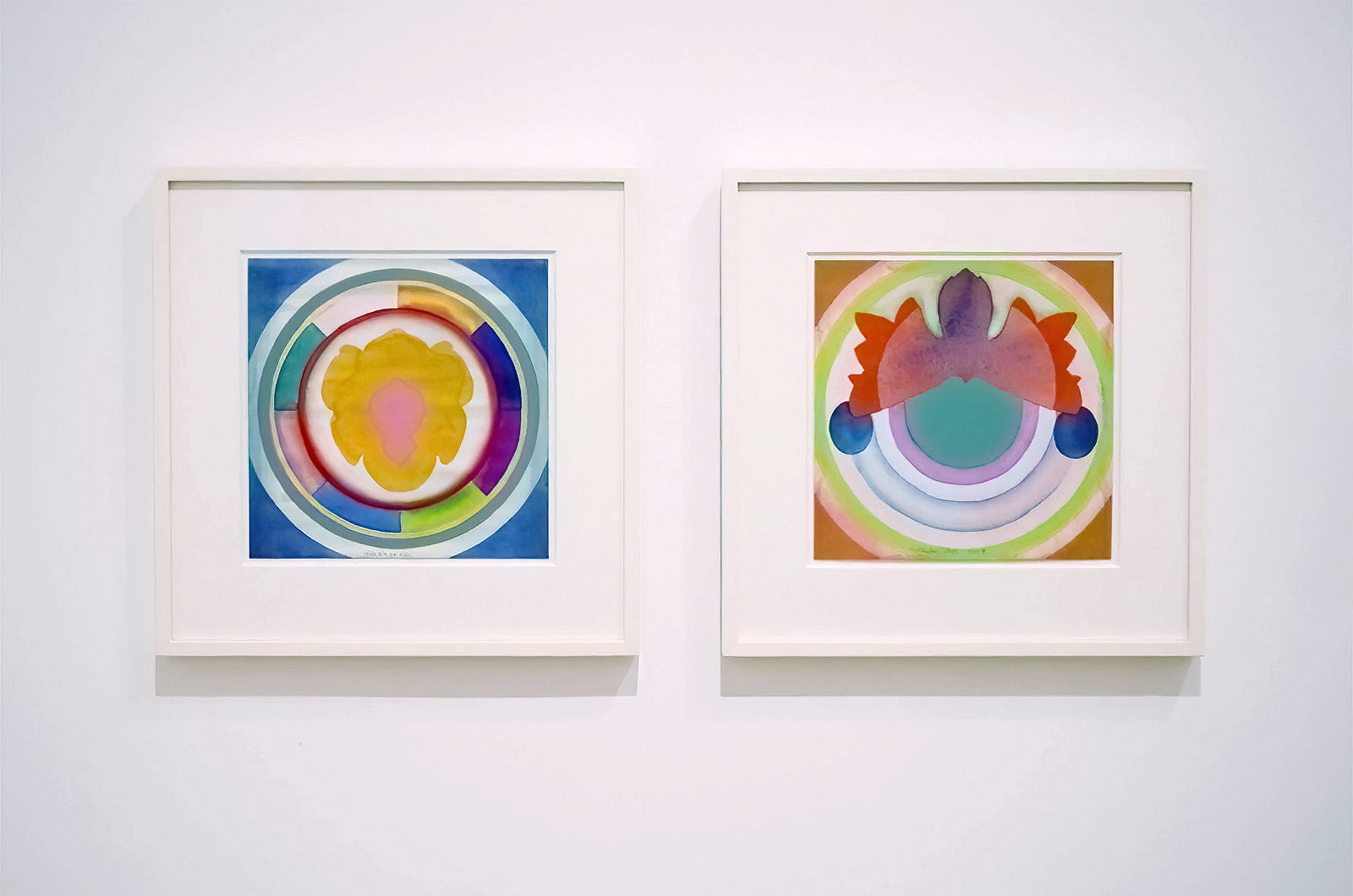
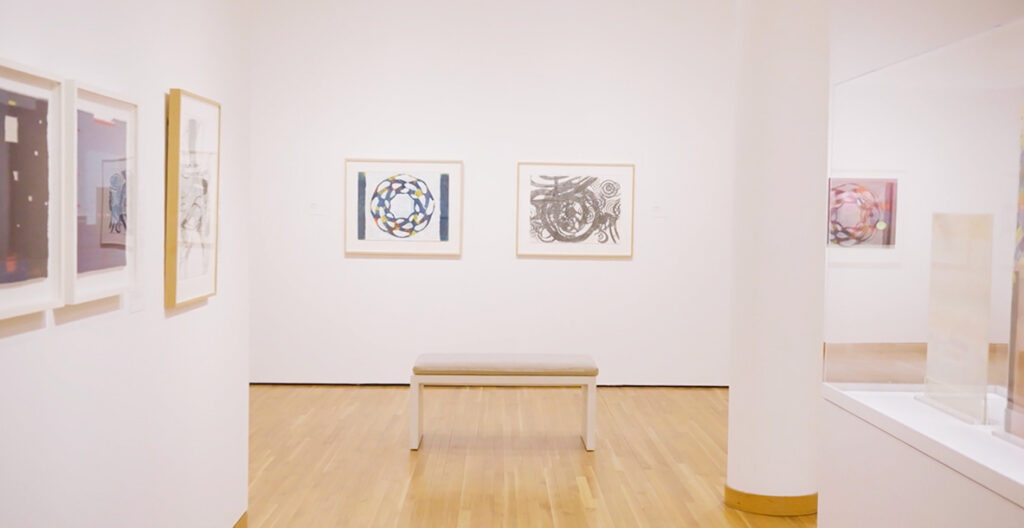
Thinking Eye, Seeing Mind: The Medford and Loraine Johnston Collection — a group of 85 works in various media on paper currently on view at the High Museum — is a promised gift to the museum that celebrates the language of abstraction. It will bridge a gap in the museum’s collection of American artists of the postwar generation. Though varied in their languages of abstraction, these works speak to ideas of contemporary art through the eyes of the collectors.
Spouses and collaborators Medford and Loraine Johnston began building their art collection in the mid-1970s by collecting contemporary artists working in a minimalist and conceptual aesthetic. Medford Johnston taught at Georgia State University from 1967 to 1997, influencing generations of artists in Atlanta. Johnston’s own work delicately balances hard-edge abstraction and saturated color with a slightly pictorial edge that references his travels to East Africa.
An early work in the collection is Ink Drawing ’59 [11] in black ink on paper by Anne Truitt, part of a suite of drawings that Truitt made early in her career. (The “59” in the title refers to the year the drawing was made.) Truitt’s brushing of overlapping rectangles in gestural marks references Asian calligraphy. The black marks on the paper made with a loaded brush contain a sculptural geometry that Truitt explored later in her life’s work. Because Truitt lived in Japan, but not until 1964, this work might be considered a premonition of her artwork to come.

It is striking to view another work in this collection that was made 61 years later by artist Stanley Whitney in relation to Truitt’s work. In Untitled (2020), a brightly hued gouache on paper, Whitney’s animated and gestural brushstrokes within a geometric composition of shifting blocks and grids of energized color positively vibrate on the page. It would have been delightful to see these works hung next to each other to carry on a conversation across the decades. However, viewers can carry the image of the Truitt drawing through their mind’s eye into the next galleries.
Many of the works in this collection show the artists’ humor and sense of play, which delight not only the eye but the mind as well. Martin Puryear’s Untitled (2019) in graphite on paper is a line drawing that reads like a study for one of his sculptures. The organic yet abstracted form is playful and referential as well as being wonderfully funny.
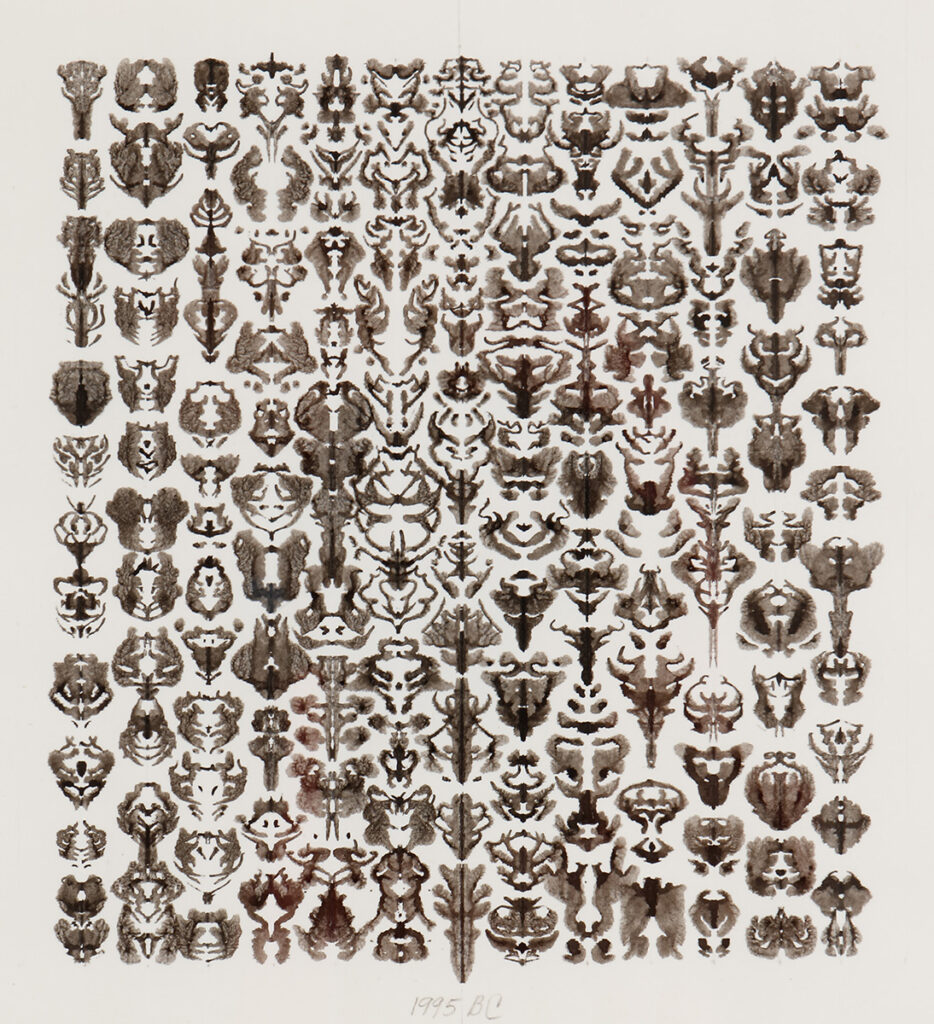
Bruce Conner’s Inkblot Drawing — 2/17/95 (1995) — is an all-over composition of hundreds of inkblots, a repetition of tiny Rorschach tests laid out on the page like hieroglyphs or Japanese calligraphy; their movement on the page is delightfully vertical.
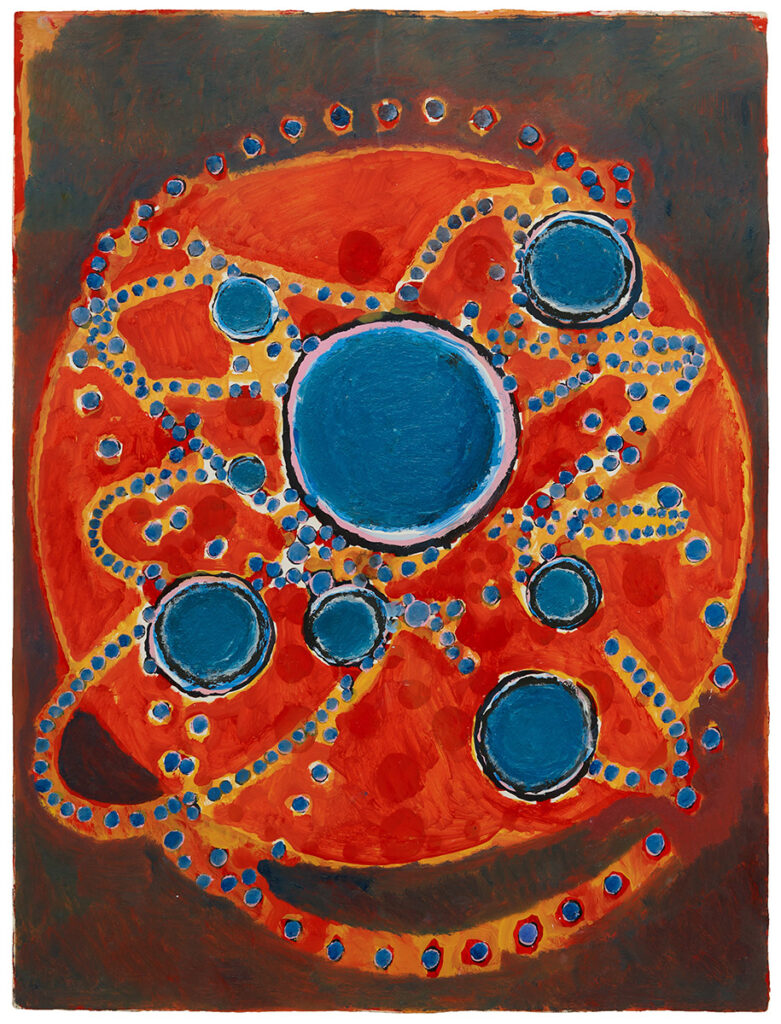
Circular compositions are present in Terry Winters’ Orb (2020) oil on paper, whose palette of warm red cadmium layered with cerulean blue circles evokes a view through a microscope or a telescope or perhaps even a table setting. Playful and richly satisfying.
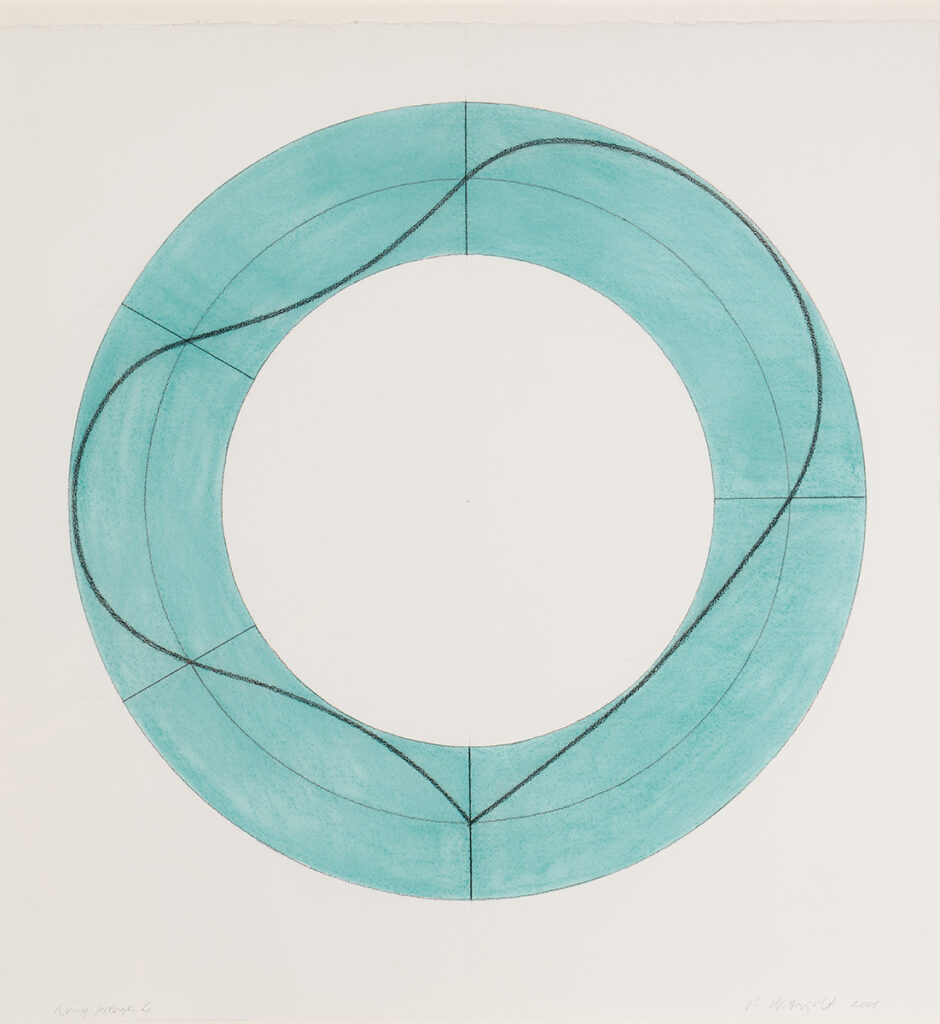
Robert Mangold’s circular Ring Image C (2008) is a turquoise circular form whose center is removed like a life preserver. The curvilinear line that traverses this circular structure is extraordinary in its movement and elegance.
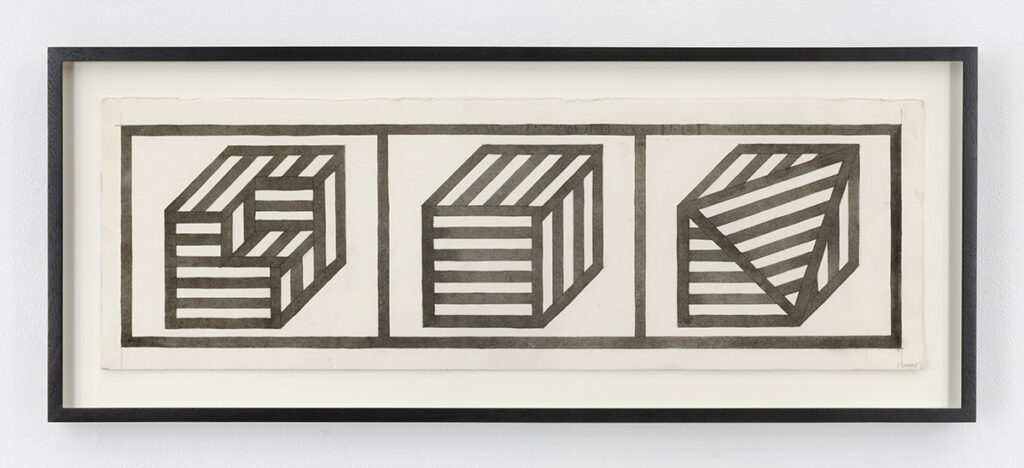
Sol LeWitt’s gouache on paper, Forms Derived from a Cube (1985), depicts three geometric, three-dimensional cubes with different sides cut away. These geometric forms are important as part of the artist’s body of work; LeWitt spent an entire career making variations on cubes, including in prominent public art in Atlanta.
Forms Derived from a Cube also connects to the LeWitt wall drawing in the atrium of the High Museum. That monumental work, Wall Drawing #729 Irregular Color Bands (1993) was executed in 2018. The work on paper reveals the large wall work — painted directly on three floating panels on the High’s first, second and third floors — in a new way.
The works in this collection are not only significant in themselves but also for the way they connect with contemporary works in the High’s Modern and Contemporary collection. These drawings enable the viewer to see the works at the High Museum with new eyes.
::

Deanna Sirlin is an artist and writer. She is known internationally for large-scale installations that have covered the sides of buildings from Atlanta to Venice, Italy. Her book, She’s Got What It Takes: American Women Artists in Dialogue (2013), is a critical yet intimate look at the lives and work of nine noted American women artists who have been personally important to Sirlin, based on conversations with each one.
STAY UP TO DATE ON ALL THINGS ArtsATL
Subscribe to our free weekly e-newsletter.

PLEASE SUPPORT ARTSATL
Your Gift Sustains the Coverage You Count On!
Related Posts