W.J. Lofton’s poetic journey: ‘I wrote the book that saved my life’
W. J. Lofton’s captivating and lyrical new poetry collection, boy maybe, encompasses his Southern upbringing as well as his experiences with being Black and queer.
The Chicago-born, Alabama-raised Lofton touches on themes ranging from faith to police brutality to love. Though the poems explore Lofton’s inherently personal and singular journey, they’re also full of relatable, timely topics.
Lofton spoke with ArtsATL about the questions and experiences that sparked the poems and how Atlanta has informed his work.
ArtsATL: The title of this collection is intriguing. What was its inspiration and meaning?
W.J. Lofton: boy maybe was wrought from a place of questioning. The poems in this collection are acts of reckoning, interrogations of what it means to be Black and queer in the American South. [It] situates the speaker inside an architecture of uncertainty, possibility and a refusal to offer easy answers.

Right now, this country is rolling back the rights of historically marginalized people, including those in the queer community. Thousands of children have been erased from this Earth in Palestine, and, here in America, they’re enduring an education system that is crumbling. Poems like “to know touch better” and “a mighty long time” contend with these erasures.
Other poems — like “dreamhouse” — ask: What does it mean to be a boy? Who is allowed to wear boyhood? Are Black children granted access to boyhood and girlhood at all?
I had so many questions, and the title boy maybe carries the weight of those inquiries.
ArtsATL: Did you create this work for a particular audience?
Lofton: Toni Morrison said, “If there’s a book you want to read, and it hasn’t been written yet, then you must write it.” I wrote the book that saved my life. Each poem is an articulation, a key to the chains that had bound me. I didn’t want to walk this Earth for the rest of my life with my head bowed in shame. In retrospect, I was writing toward a freer version of myself, refusing anything and anyone who told me that who I love and how I love is abominable.
If anyone has ever been in pain or felt abandoned, these poems are for them. If grief, joy or even the ecstasy of pleasure has been your silhouette, these poems are for you. My audience is made up of people who are not afraid of their suffering yet do not seek it to be the final punctuation of their lives.
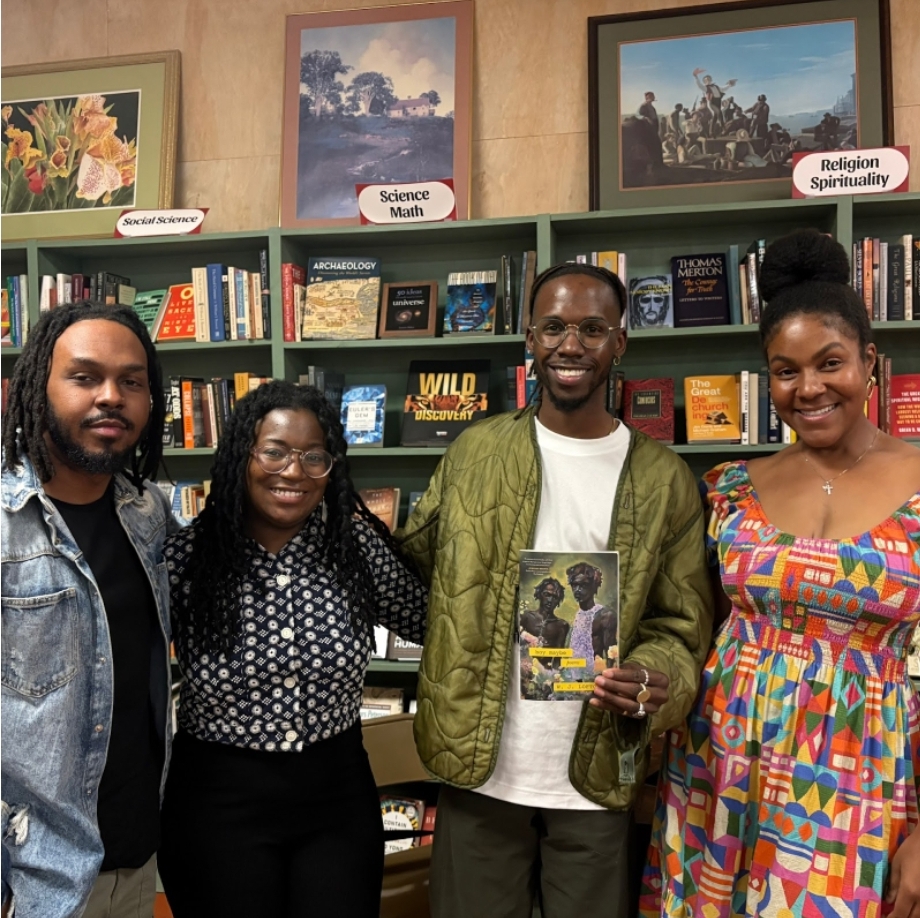
ArtsATL: Do you feel that having lived in Alabama gives you a unique perspective?
Lofton: If Chicago is my bones, Alabama is my flesh, my muscle and my tendons. I was raised there for most of my life, and its impact on me is immeasurable. Few things bring me ease like driving on a long Alabama road, the trees nodding their green heads at me, pulling over to admire the red clay. I ran away once in sixth grade and spent hours ducking around trees and laying low in the valley. Alabama gave me a deep love for nature. I’d walk home after school just to breathe the air and feel the sunlight kiss my face.
It also refined my taste in food: cast iron skillet cornbread, baked chicken, greens, sweet tea — food is just better in the South. And the music is food, too. You can pluck songs straight from the air, eat them and let them fill you up. The South has a rich history when it comes to music — and most things, really. Artists like Otis Redding, Outkast, Gladys Knight are from here. I was surrounded by those sounds and flavors, and they materialize in my work. I’m really lucky to have these experiences as a writer.
ArtsATL: How has Atlanta shaped your work?
Lofton: Living in Atlanta, I’m surrounded by talented Black and queer folks who inspire me and make me feel less alone. It’s a gift to have community. At the end of the day, that’s what we all want: to belong and to have our needs met.
Atlanta has taught me how to collaborate and how to celebrate others. It’s a shimmering road of self-discovery, and each day I wake up learning something new about myself. This city has given me irreplaceable friends. Truly, it’s given me a life I once only dreamed of. And that, to me, is a miracle.
::

Jina DuVernay is a librarian, a contributing writer for Sisters From AARP and an editor for the literary magazine midnight & indigo.
STAY UP TO DATE ON ALL THINGS ArtsATL
Subscribe to our free weekly e-newsletter.

PLEASE SUPPORT ARTSATL
Your Gift Sustains the Coverage You Count On!
Related Posts