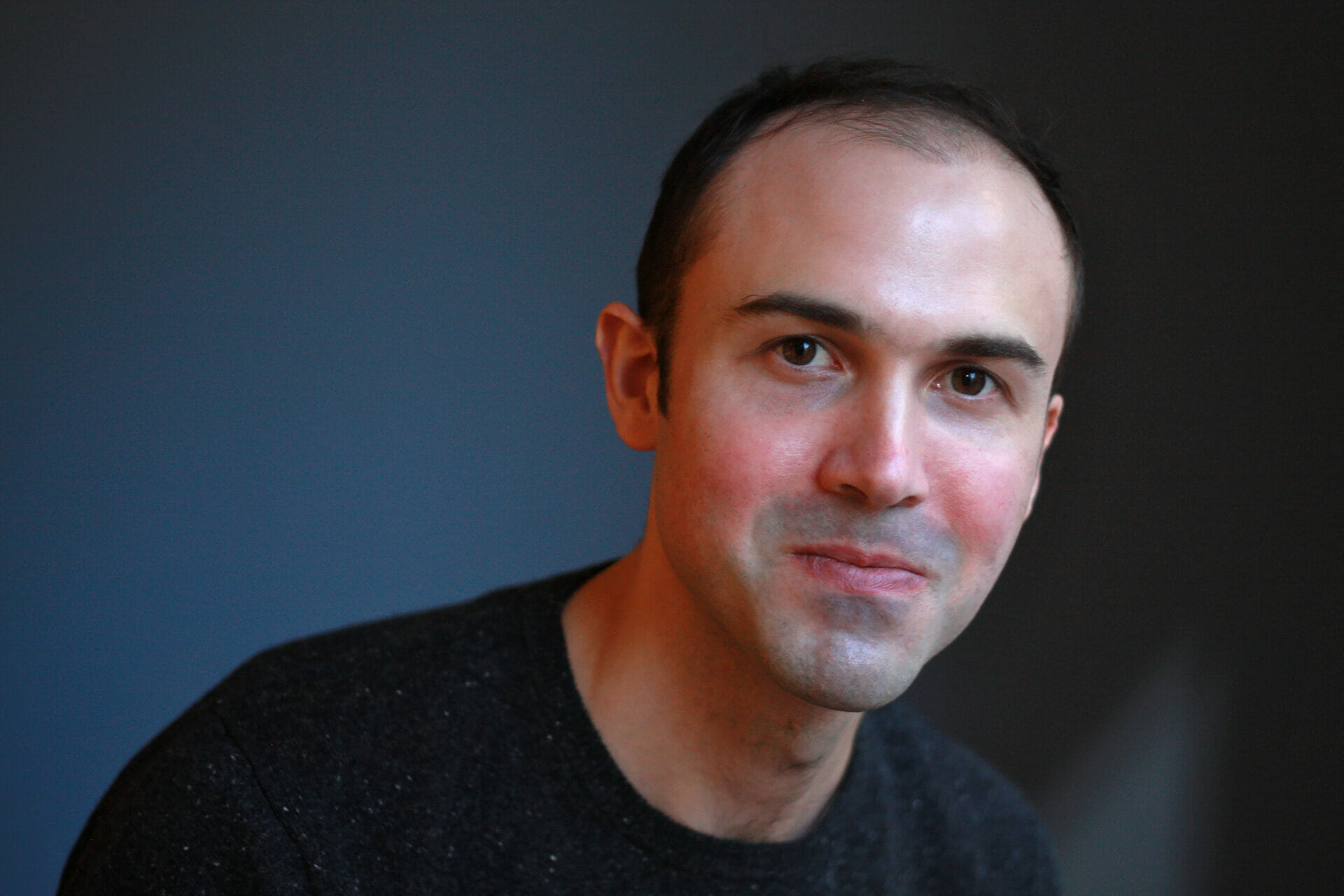
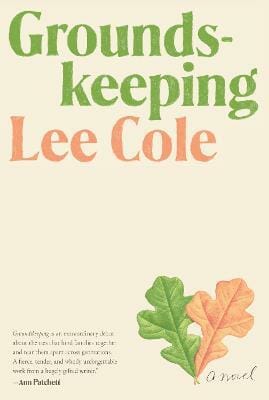
Lee Cole’s debut novel “Groundskeeping” tills field of class and cultural divides
Lee Cole’s debut novel, Groundskeeping, opens with an observation by Owen Callahan, an aspiring writer who works as a groundskeeper at a small college in Kentucky. I’ve always had the same predicament. When I’m home in Kentucky all I want is to leave. When I’m away, I’m homesick for a place that never was.
Owen’s struggle to find his footing at home when the ground has shifted — thanks to political, religious and class divides in the run-up to the 2016 election — intensifies when he falls in love with Alma Hazdic, a Muslim Bosnian whose migration to the United States was precipitated by war. Though their stories of displacement are of a different magnitude, Owen’s and Alma’s understanding of how cracks can quickly become chasms serves as a stand-in for larger issues in the country.
Like, Owen, Cole worked as a groundkeeper before being accepted to the Iowa Writers’ Workshop. “It was pretty grueling, monotonous work,” he says. “But I did learn a lot from my co-workers, specifically how to write good workplace dialogue. I paid attention to the way we talked, the jokes we told, the ways we killed time. A lot of that found its way into the book.”
In advance of his talk and book signing at A Cappella Books this Sunday, Cole shared his perspectives on homesickness, navigating class and cultural divides, and finding empathy for characters despite his impulse to judge them.
 ArtsATL: Early in Groundskeeping, we learn the Cherokee word for Kentucky is “a dark and bloody ground.” Why did you want your reader to contemplate the territory from a Native American perspective?
Cole: So much of the book is about political and cultural strife in America and whether we can trust nostalgia or our notions of the past. The idea that Kentucky was “a dark and bloody ground,” a land that was fought over by various Native American tribes, is not precisely true, and was probably used as a justification by European colonizers to lay claim to the territory. What’s clear is that if the land wasn’t contested before, it certainly was after the Europeans arrived. It’s been a site of bitter division ever since, whether in the Civil War, which tore families apart, or more recently, as current political turmoil continues to divide families. But I thought it was worth mentioning the provenance of the word “Kentucky” if only as another example of the ways in which our stories have mythologized the past and therefore can’t necessarily be trusted.
ArtsATL: In part, Groundskeeping explores the tension between Kentucky’s agrarian past and the “Walmartification” of the region? Why does this stratification interest you as a plot device?
Cole: I think that consumerism’s colonization of rural life is the primary issue that all Southern and rural writers should be thinking about in their work. Maybe not overtly, or in any kind of didactic way. But it’s changed life completely in Kentucky, erasing traditions, folkways and dialects, replacing what were once vibrant small towns with strip malls and chain restaurants. This process is happening in cities, too, of course, but it’s metastasized more rapidly in rural areas. Epidemics of obesity, opioid addiction and depression are not occurring in a vacuum. They’re tied directly to material conditions that produce alienation. I think that as a writer, I’m obliged to explore that alienation in my characters.
ArtsATL: The love-hate relationship with home, homesickness and homecomings are recurring themes throughout the novel. Did you start out intending to explore these mixed emotions? Or did they become apparent as the narrative unfolded?
Cole: I knew from the beginning that I wanted the book to be about homesickness. It’s been a perennial problem for me — that when I’m home in Kentucky, I get antsy to leave. But when I’m away, I get homesick. Though I can never quite tell whether I miss my home or my childhood. And there’s a big difference between the two. If I miss my home, I could conceivably go back and live there. But I can’t go back to my childhood. I think that Owen is wrestling with similar issues. It’s not just that he misses Kentucky. It’s that he misses a simpler time when his family was still together and there wasn’t so much turmoil. At the same time, he’s not sure whether to trust this nostalgia.
ArtsATL: As someone who was born and raised in rural western Kentucky, held blue collar jobs before being accepted to the Iowa Writers’ Workshop and currently lives in New York City, you understand Owen’s predicament of having to straddle class and cultural divides. What did you want to convey about the complexity of occupying several spaces simultaneously and the defensiveness that can arise when outsiders depict entire regions or populations in a reductive or stereotypical fashion?
Cole: It’s true that I find myself defending different groups depending on where I am. I think this is because people who live in different “bubbles” rarely have occasion to spend time with one another. It’s easy to badmouth someone when they’re an abstract caricature rather than a living, breathing human being that you’re looking at face to face. I think that I, like Owen, have had the experience of spending time in different bubbles, and getting to know and love people in each.
ArtsATL: Whether you’re writing about love that is romantic, filial, platonic or Owen’s love for Kentucky, the emotions are never one-dimensional. Instead, they are conflicting, fraught and messy. What did writing about love teach you about the nature of love?
Cole: Owen, at one point in the novel, discovers a quotation by Freud that “love is homesickness.” The implication is that what we long for in another person is a sense of the familiar, or perhaps the familiar in a new form. Owen has this simultaneous aversion and attraction to his home — to the familiar — and I think there’s a similar dynamic to his relationship with Alma.
ArtsATL: Despite Owen’s disdain for his family’s politics and provincialism, you avoid rendering them as caricatures. Did any particular character inspire your most empathic and nonjudgmental instincts as a writer?
Cole: Uncle Cort was probably the hardest character to empathize with. Starting out, I wrote him as a character who says difficult, ugly things. People like him seemed to emerge in droves after Trump won. He gave them permission to say the ugly things they’d been holding back. But as I wrote the character, I began to ask myself, why is Cort the way he is? Where does his anger come from? And I developed this backstory, where he’d been involved in a brutal car accident and was now addicted to painkillers. I don’t think this pain excuses his behavior, but I think it makes him a little more understandable as a person.

ArtsATL: Did any of your characters surprise or baffle you as Groundskeeping unfolded?
Cole: In some ways, Owen surprised me as a character. I gave him a lot of my life experiences, but they’re often exaggerated, and the character almost functioned as a counterfactual exploration of what my life might have been like if things had gone differently. I pushed him to transgress and make decisions as a character that I wouldn’t necessarily make, and his reactions to those decisions, and the way he dealt with their aftermath, often surprised me.
ArtsATL: Did your time at the Iowa’s Writer’s Workshop hone your listening skills as a writer, or are you naturally inclined to notice people’s speech patterns, colloquialisms and/or idiosyncrasies?
Cole: I think my ear for dialogue was pretty well honed before Iowa. What I learned at the workshop that was truly invaluable was how to write a scene. Scenes are the building blocks of a novel or story, and though I had some sense of how they worked, it wasn’t until I got to Iowa that I began to understand their importance. To be more specific, Iowa taught me how to write using concrete, sensory details, and how to manage the tension in a scene so that every beat is moving the story forward.
ArtsATL: Owen and Alma reach an impasse when she feels he’s crossed a line as a writer. Where do you stand re: who gets to claim a story and the ethics of telling someone else’s story without their permission? Is your position fixed, or evolving?
Cole: I’d like to think my position is evolving. The inherent conflict of two writers laying claim to the same experience is endlessly fascinating to me. Personally, I think that some writers have a greater claim to material than others, but that most of the time, anything is fair game as long as it’s not a gross invasion of privacy. By writing about Alma’s family secret, I think Owen is guilty of this transgression. It’s not something I would do as a writer. But there’s always this question of, where is the line? That’s a question a lot of writers have to ask themselves regularly. I do think that real-life experiences have a ring of truth to them that’s hard to replicate. Some of those stories are too hard to pass up when you hear them. But that question of who the story belongs to may not be fully answerable. In some ways, it belongs to whoever can tell it well enough, or whoever sees its value as a story to begin with.
::
Gail O’Neill is an ArtsATL editor-at-large. She hosts and coproduces Collective Knowledge, a conversational series that’s broadcast on THEA Network, and frequently moderates author talks for the Atlanta History Center.
STAY UP TO DATE ON ALL THINGS ArtsATL
Subscribe to our free weekly e-newsletter.

PLEASE SUPPORT ARTSATL
Your Gift Sustains the Coverage You Count On!
Related Posts